
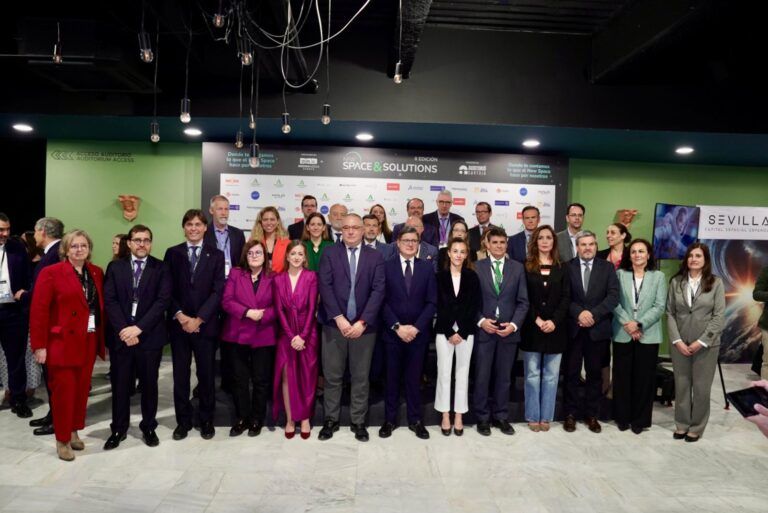
- The second edition of New Space & Solutions turned Seville into the epicentre of the international space debate on an opening day marked by a historic connection with the International Space Station.
- The event kicked off with a high-level agenda attended by representatives and officials from Seville City Council and the Regional Government of Andalusia, as well as the Spanish Space Agency, the Ministry of Science, Innovation and Universities, the Andalusia Aerospace Cluster, Hisdesat, the Canary Islands Aerospace Strategy and Pablo de Olavide University, amongst many other entities from the New Space ecosystem.
The second edition of New Space & Solutions turned Seville into the epicentre of the international space debate during a high-level opening day, marked by a historic connection with the International Space Station (ISS) and the participation of institutional representatives, companies, universities and key entities from the New Space ecosystem.
The event kicked off at the Cartuja Auditorium, in Sevilla TechPark, attended by representatives from Seville City Council, the Regional Government of Andalusia, the Spanish Space Agency, the Ministry of Science, Innovation and Universities, Hisdesat, the Canary Islands Aerospace Strategy, Pablo de Olavide University and other leading organisations in the sector.
One of the most exciting moments of the day was the live link-up with the International Space Station, which allowed attendees to speak with active astronauts some 400 kilometres from Earth. Participating in this session were NASA’s American commander Jessica Meir and ESA’s French astronaut Sophie Adenot, who shared their experiences of microgravity, as well as some of the key advances and challenges in space research.
The Spanish Space Agency promotes the growth of New Space
New Space & Solutions featured a prominent role for the Spanish Space Agency, whose director, Juan Carlos Cortés, was interviewed by María Medina, managing director of Medina Media Events, the event’s organiser.
During the conversation, Cortés spoke very highly of Spain’s position in the sector, highlighting that “we are the fourth-largest European economy in the space sector” and that the country possesses comprehensive capabilities, from satellite design to operation. He also highlighted a key milestone in technological sovereignty, stating that “this year will see the maiden flight of Miura 5”, which will enable progress towards an autonomous system for placing payloads into orbit.
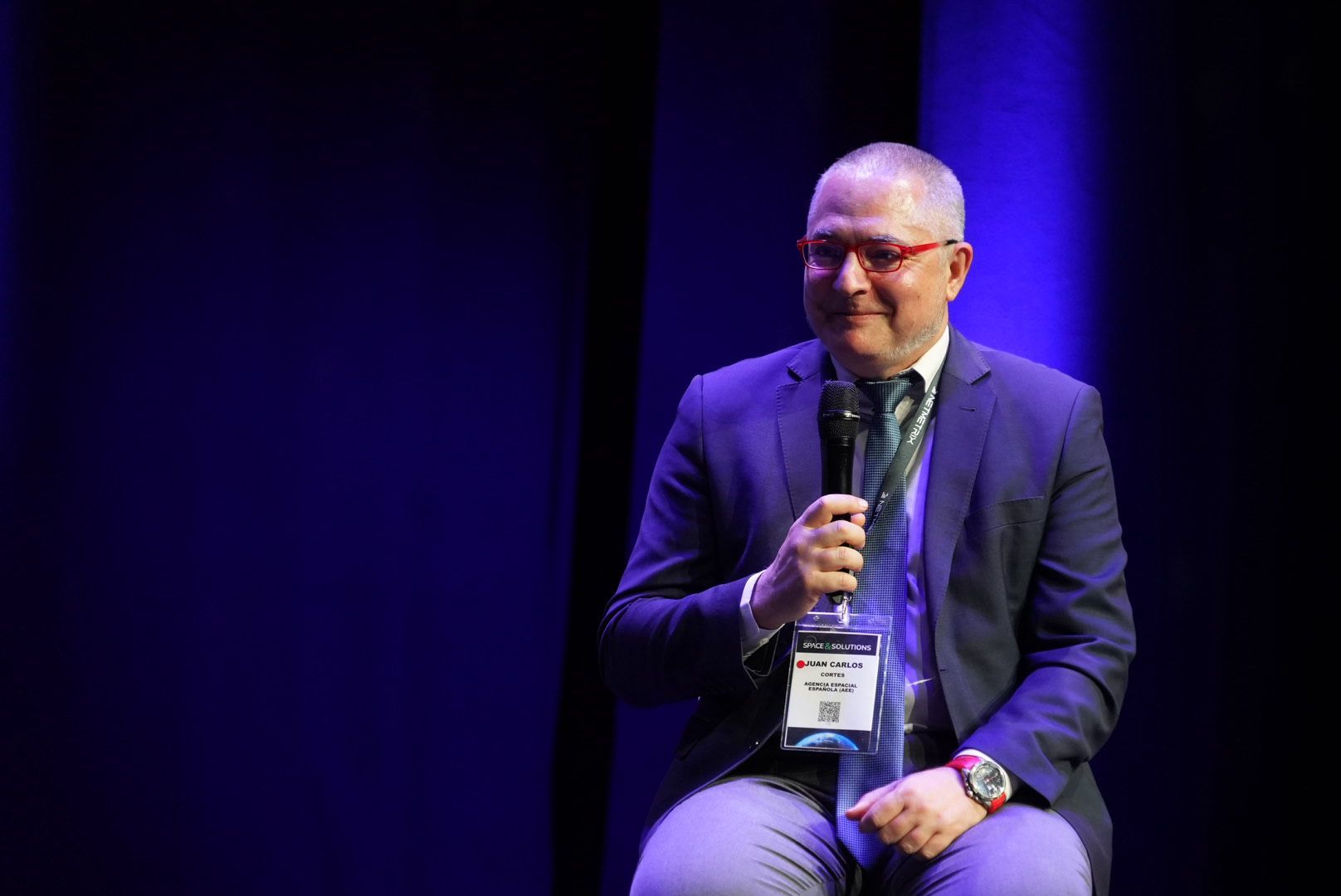
Juan Carlos Cortés, Director of the Spanish Space Agency, during the 2nd edition of New Space & Solutions.
In the field of applications, he highlighted strategic programmes such as LEO PNT, secure communications, leadership in low Earth orbit and the development of the Atlantic constellation, emphasising that “the greatest value lies in the services enabled by satellites”. He also stressed that one of the Agency’s roles is to anticipate the future, foresee technological needs and develop new capabilities.
Regarding the international context, he warned that Europe is at a decisive juncture in an increasingly competitive and multipolar landscape. In this regard, he highlighted the momentum behind lunar exploration and noted that “around 400 expeditions to the Moon are expected over the next 20 years”, a forecast that heralds a new cycle of technological and industrial development.
During his opening address, Juan Carlos Cortés also reaffirmed Seville’s strategic role in the sector, stating that “Seville is Spain’s space capital” and that it has established itself as one of Europe’s leading cities in the space sector.
Seville reinforces its role as a technological hub in southern Europe
The opening ceremony was attended by a number of prominent institutional figures, led by the Deputy Mayor of Seville, Álvaro Pimentel, who highlighted the city’s growing role in the aerospace sector and emphasised that events such as New Space & Solutions reinforce its international standing.
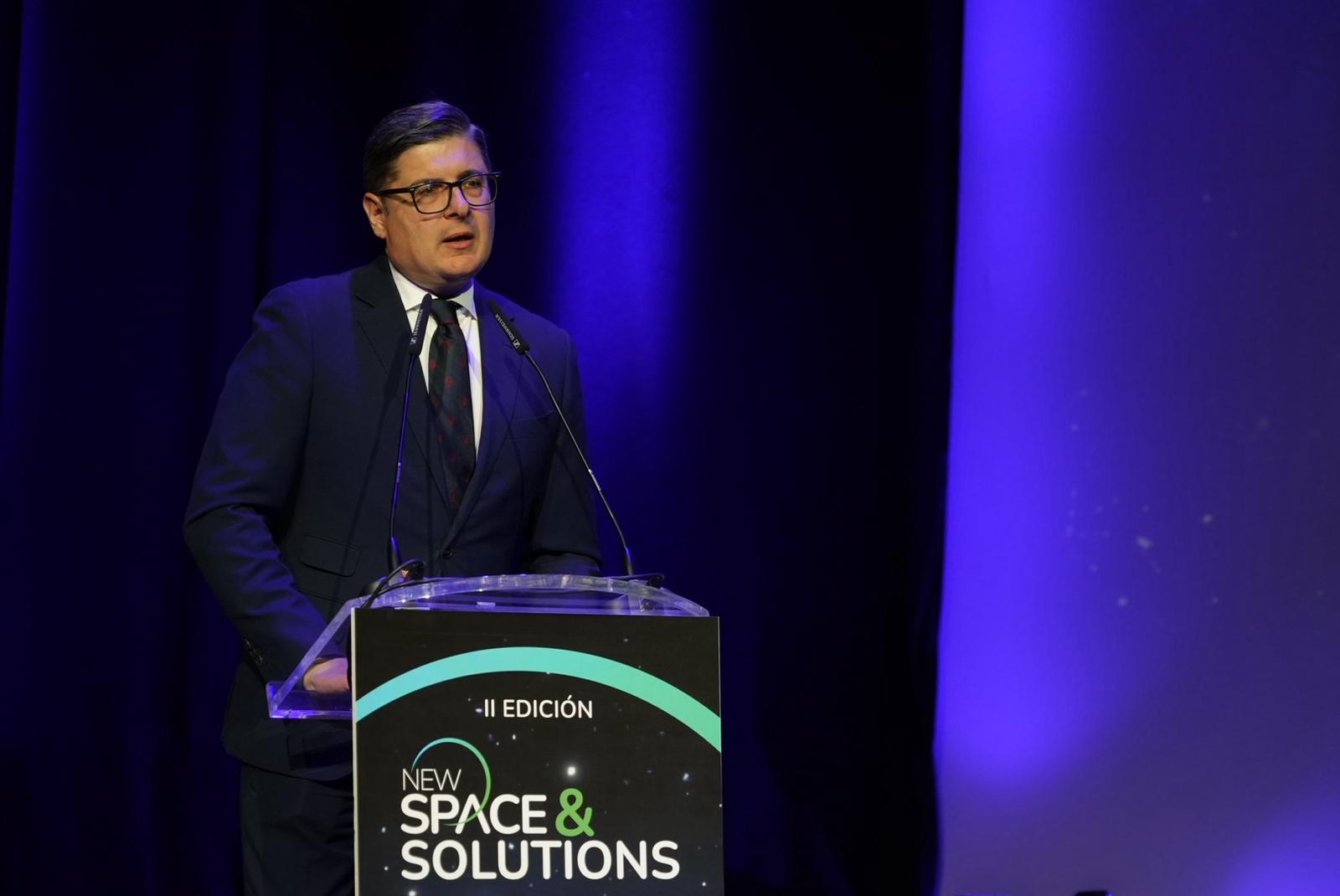
Álvaro Pimentel, Deputy Mayor of Seville, during the second edition of New Space & Solutions.
Following the connection with the ISS, which he described as “a real honour”, he highlighted that such milestones once again place Seville at the centre of innovation, technology and the aerospace sector. Pimentel defended the city council’s strategy to diversify the economy and strengthen the business, institutional and university fabric, assuring that “Seville is becoming a key reference point in the aerospace sector”.
He also stressed that the aim of positioning the city as Spain’s space capital is not merely a slogan, but a roadmap designed to attract investment and talent. “Seville does not just want to look to the future; Seville wants to build it and lead it,” he concluded.
Joining him were Luis Pérez, managing director of Sevilla TechPark, who highlighted the park’s role as a driver of innovation and recalled the involvement of organisations based in the area in the Artemis II mission; and Juan Román Gallego, managing director of Andalucía Aerospace, who highlighted that Seville has established itself as one of the leading players in the European aerospace ecosystem and emphasised the need to continue attracting investment, talent and projects.
Institutional support for the sector’s development
The opening day also featured the participation of senior officials from the Regional Government of Andalusia and the Spanish Government, who agreed on the strategic role of the sector in economic, technological and industrial development.
Daniel Escacena, Secretary General for Research and Innovation at the Regional Ministry of Universities, Research and Innovation, highlighted Andalusia’s commitment to the aerospace sector and assured that the region is working to make Seville and Andalusia an international space hub.
For her part, María López Sanchís, Secretary General for the Environment and Climate Change at the Regional Ministry of Sustainability and the Environment, highlighted the usefulness of space technologies for the management of natural heritage, whilst José Javier Alonso Membrives, Secretary General for Industry and Mines at the Regional Ministry of Industry, Energy and Mines, emphasised that space “is no longer a distant frontier” but has become a key pillar of security and autonomy.
They were joined by Teresa Riesgo, Secretary General for Innovation at the Ministry of Science, Innovation and Universities, who highlighted the sector’s growth in Spain and stated that “Spain is a country to settle in, where space is a priority”, referring to institutional support, increased investment and the emergence of new companies.
The space sector: a driver of innovation and development
Seville City Council also took centre stage at the panel discussion ‘Seville and Rome in the Ariane Cities Community: boosting the local economy through the space sector’, moderated by Silvia de los Santos, senior consultant in the aerospace and defence sector at the Andalusian Technology Corporation (CTA).
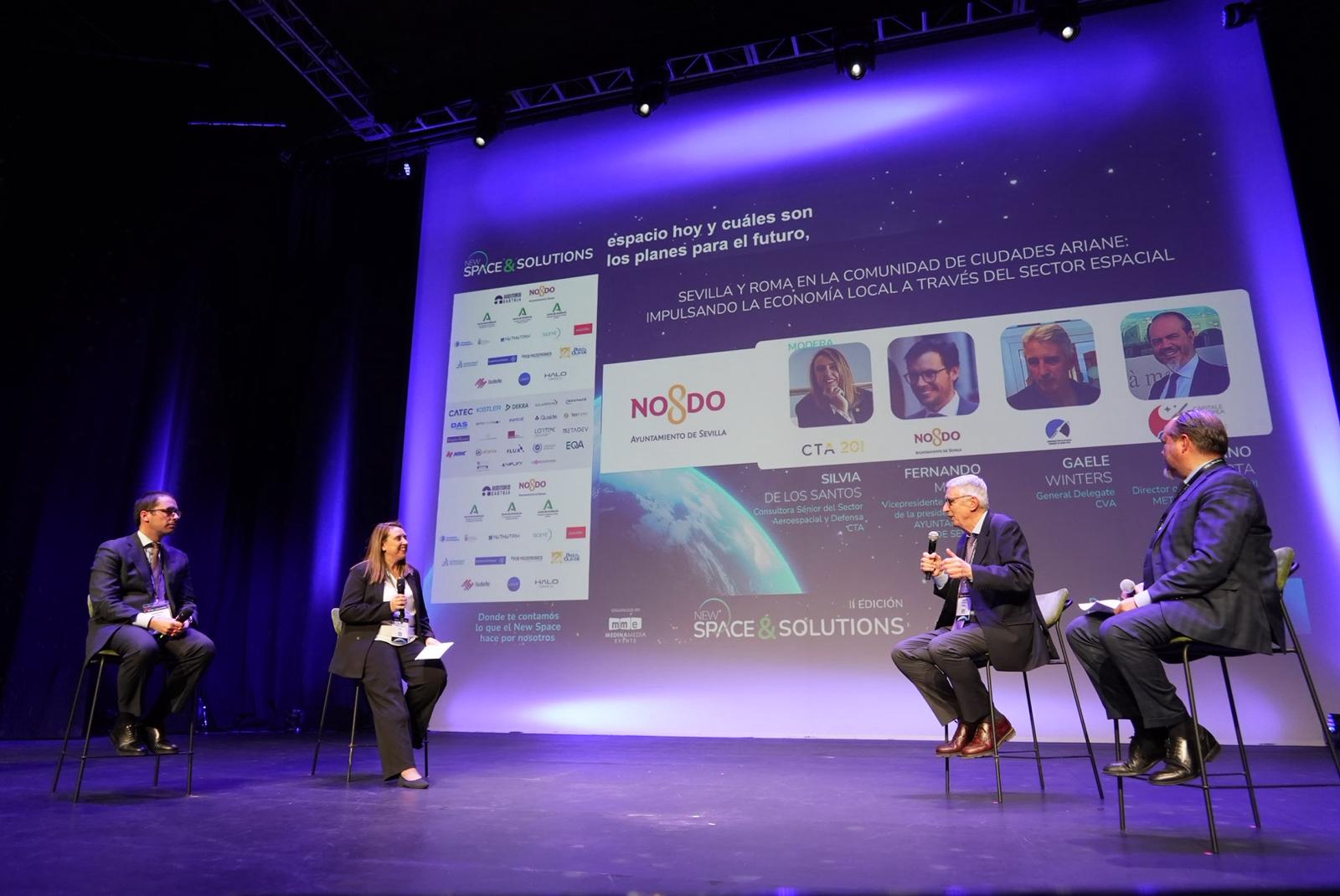
The panel was organised by Seville City Council during the second edition of New Space & Solutions.
During the session, Fernando Mañes, Deputy Vice-President of the CVA Presidency at Seville City Council, highlighted that the city’s presidency of this network has served to strengthen its international profile and attract opportunities. For her part, Gaele Winters, General Delegate of the CVA, championed the value of this European network as a space for collaboration between industry, cities and agencies. Finally, Stefano Carta, institutional representative of the Metropolitan City of Rome, emphasised cooperation between cities as a lever for growth and sustainable innovation.
The institutional session was rounded off with contributions from Ana María Molina, CEO of Hisdesat, who highlighted the strategic importance of space and the company’s role in strengthening European technological sovereignty; Miguel Belló, Commissioner for Canarian Aerospace Strategy, who highlighted the Canary Islands’ unique potential in this field; and Francisco Oliva Blázquez, Rector of Pablo de Olavide University, who championed the university’s role as a strategic and multidisciplinary ally of the New Space ecosystem.
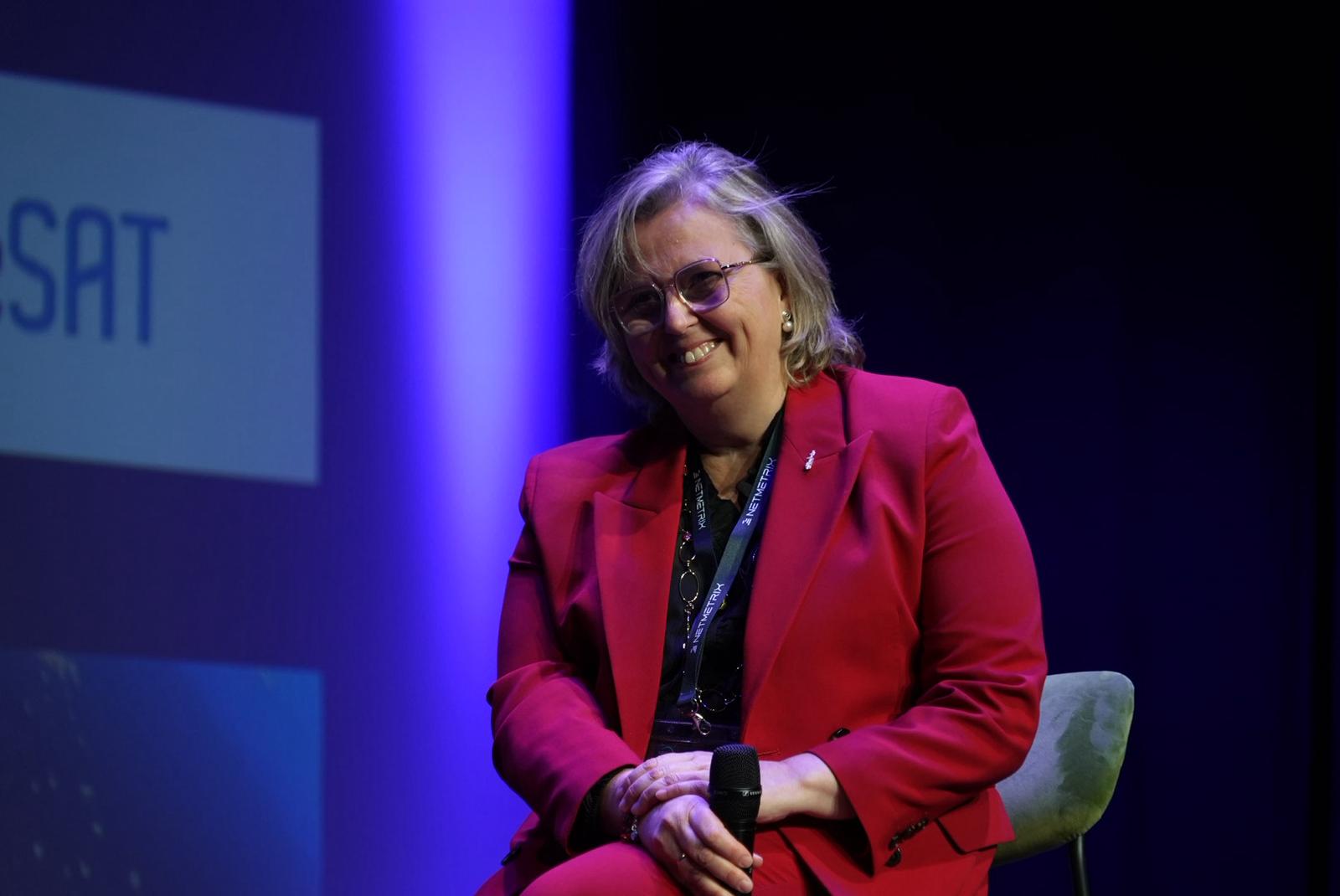
Ana María Molina, CEO of Hisdesat, during the 2nd edition of New Space & Solutions.
Oliva also announced the launch of the first university aerospace chair in partnership with the Spanish Space Agency, emphasising the importance of areas such as regulation, sustainability, ethics and data science, as well as the decisive role of talent in the sector’s future.
A moving tribute to Ricardo Medina
The opening day also had a distinctly emotional tone with the tribute to Ricardo Medina, founder of Medina Media and driving force behind landmark events such as New Space & Solutions.
His daughters, María Medina, Managing Director of Medina Media Events and Executive Director of Medina Media Global, and Sonsoles Medina, Director of Operations at Medina Media Global, led a moving tribute in which they recalled his personal and professional legacy.
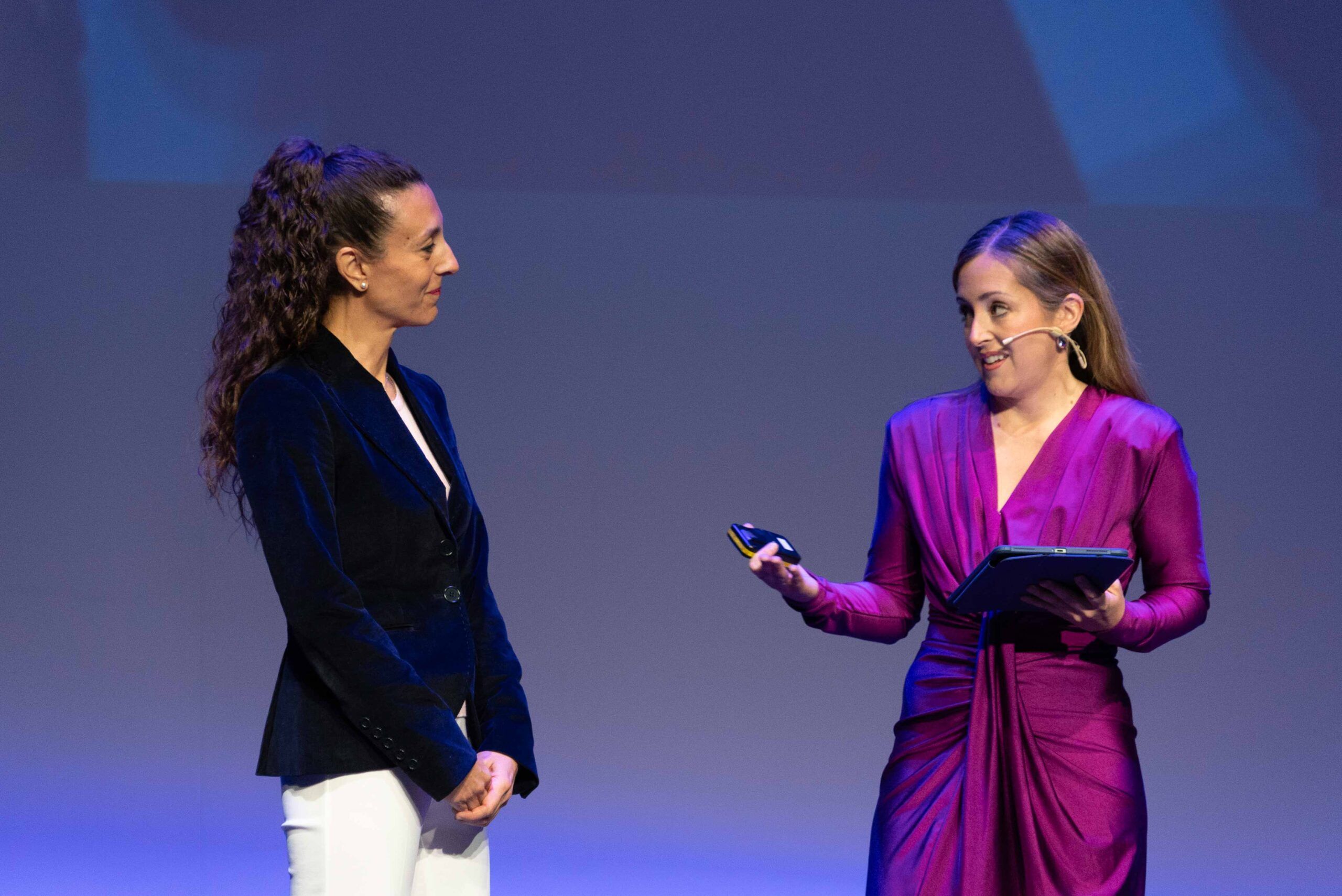
“Today had to be even more special,” they said, highlighting that Ricardo Medina not only founded a company but also inspired generations of journalists and promoted pioneering initiatives. In one of the most moving moments of the tribute, they also emphasised his human touch: “He knew how to bring out the best in everyone; he inspired and shared his passion.”
Technology, regulation and new frontiers of the space ecosystem
The programme also included speeches by Julia Criado, Deputy Director-General for Radio Spectrum Planning and Management, who highlighted the role of regulation in ensuring the proper functioning of satellite systems, and Carmen Sillero Illanes, Senior Analyst for Economics and Policy at the European Commission’s Joint Research Centre, who highlighted the role of space as a driver of innovation, defence and territorial development.
During the afternoon session, Guillermo Rojo, an astronaut fitness coach and external consultant to the Austrian Space Forum, highlighted the importance of physical preparation for space missions and presented the Maxforce Device, a portable device designed to measure force in microgravity environments and improve performance monitoring during long-duration flights.
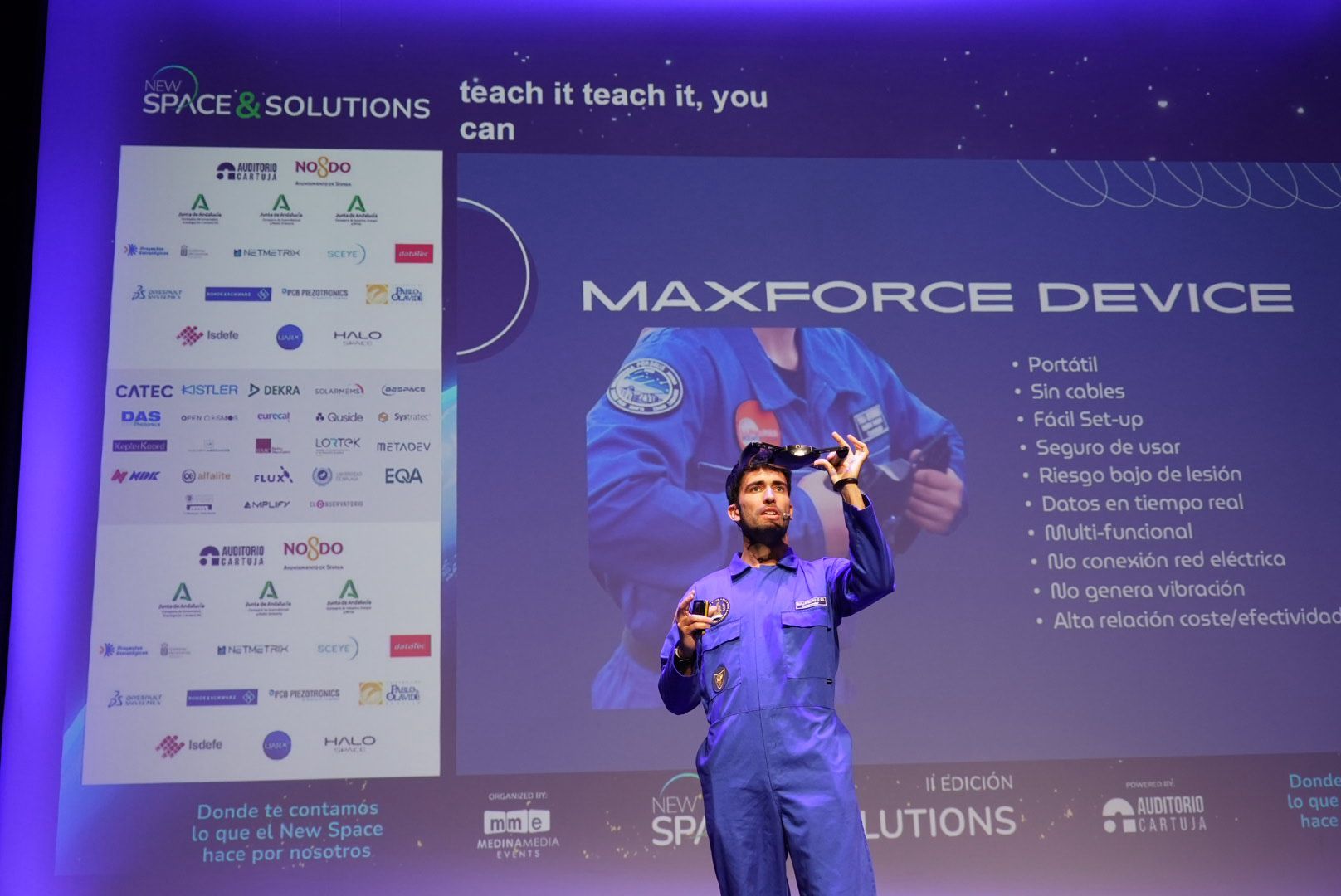
Guillermo Rojo, astronaut fitness trainer, during the 2nd edition of New Space & Solutions.
From the business sector, Pablo Álvarez, CEO of Netmetrix, addressed the convergence between 5G networks and satellite communications, whilst Alfredo Serrano, EMEA Director at Sceye, presented the potential of stratospheric platforms as a new layer of infrastructure between Earth and space.
Also speaking were Víctor Montero, co-founder and Director of Business and Operations at B2Space, who highlighted the stratosphere as the new operational frontier of the aerospace ecosystem, and Carlos Mira, CEO of HALO Space, who focused on the strategic value of near space and the development of a sustainable presence in this new layer of activity.
The strategic role of New Space
The event also featured contributions from Rohde & Schwarz, Isdefe, Eurecat and PCB Piezotronics, amongst other organisations that addressed the technological and strategic challenges of the new space paradigm.
From Isdefe, Rosa Pulido Puerto and Francisco Javier Morales emphasised the importance of public-private collaboration and New Space as a lever for strengthening critical capabilities and services. For his part, Joan Mas-Albaigès, Scientific Director of Digital Technologies at Eurecat, highlighted the role of technology centres as a bridge between university research and the needs of industry.
The programme was rounded off by a presentation from Philippe de Cordemoy of PCB Piezotronics, who highlighted the essential role of sensors in all phases of space development, from design to launch.
Young talent, key to the sector’s future
The opening day also featured three panels focusing on talent, innovation and entrepreneurship, with a particular emphasis on generational renewal and new business initiatives.
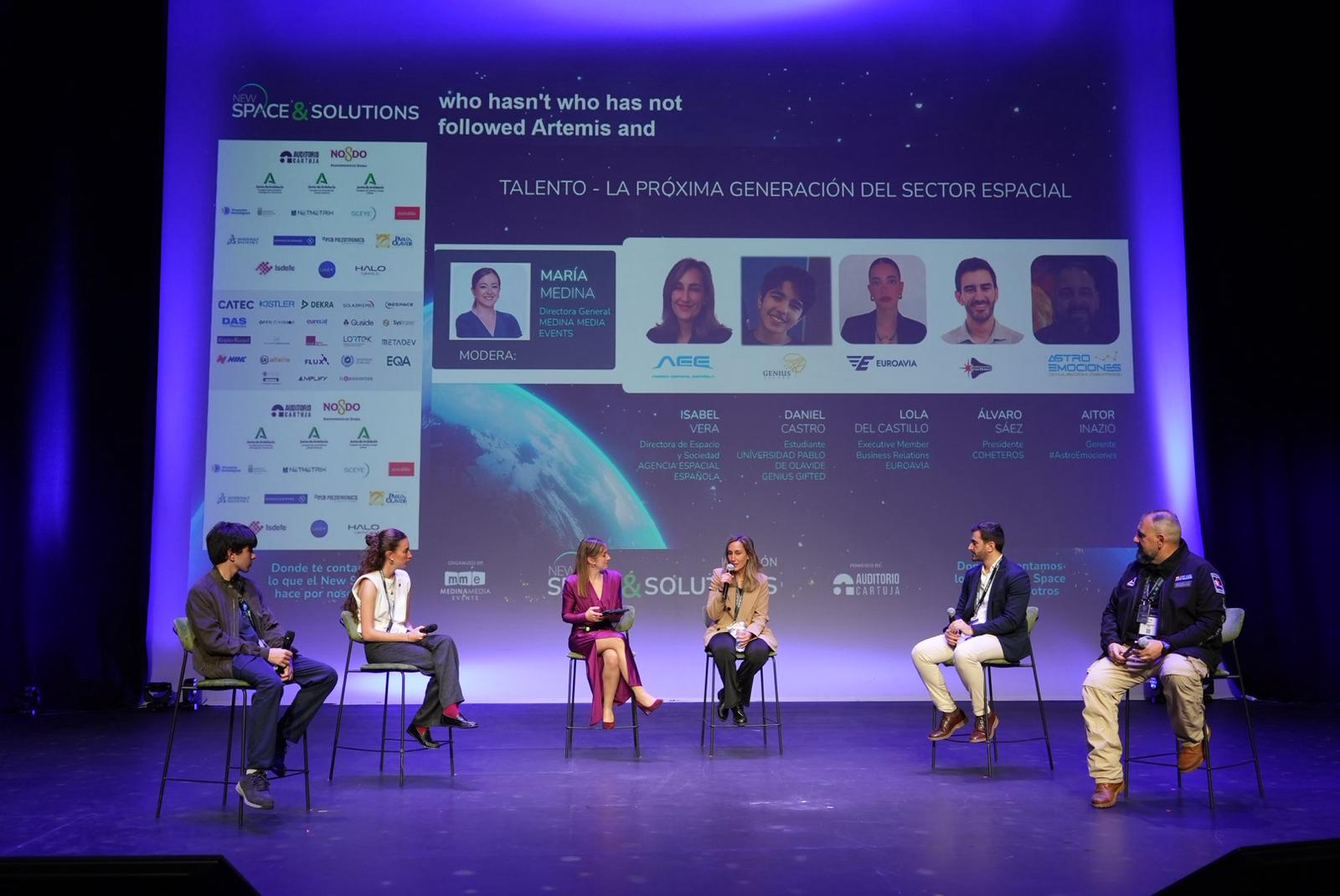
Panel dedicated to young talent during the 2nd edition of New Space & Solutions.
One of the highlights was ‘Talent – The next generation of the space sector’, which addressed the need to encourage careers in the sector, link training with employability, and respond to the growing demand for qualified professionals.
The panel featured Isabel Vera, Director of Space and Society at the Spanish Space Agency; Aitor Inazio, Manager of AstroEmociones; Lola del Castillo, representative of Euroavia; Daniel Castro, a student affiliated with Pablo de Olavide University; and Álvaro Sáez, President of Coheteros, who all agreed that the sector’s growth is inspiring careers and creating real opportunities.
The panel ‘ESA BIC – Andalusia in orbit: a commitment to innovation and space entrepreneurship’ also featured prominently, with Gracia Catalina Piñero, Pepe Pulido, Carlos Javier Martín and Nacho Mancha analysing the challenges of space entrepreneurship, focusing on funding, technological maturity and the difficulty of breaking into a highly demanding industry.
Meanwhile, the panel organised by UARX, ‘Dual-Use in the Defence Industry’, highlighted the strategic importance of space and collaboration between public and private actors in a changing geopolitical context. Participants included Efrén Díaz Díaz, Margarita Ardao, Stefano Li Bassi and Carlos Fernández de la Peña, who all agreed on the growing importance of space in security, industry and strategic autonomy.
Prominent exhibition area featuring 18 organisations
New Space & Solutions features a prominent exhibition area, where around twenty organisations showcase their main innovations and projects during the in-person sessions, offering a tangible insight into the potential of the New Space ecosystem. From the design of a VTOL drone presented by CATEC to cutting-edge solutions in resonators and quartz oscillators from Alfalite, including technology supplied by NDK, space sensors from Solar MEMS, solutions from Kistler, measurement instruments from Systratec, as well as technological offerings from Rohde & Schwarz, Lortek and PCB Piezotronics. The exhibition area also features Datatec’s validation capabilities, Open Cosmos’s data management platform, the specialist legal consultancy of Augusta Abogados, the research potential of Pablo de Olavide University, and the immersive experience presented by AstroEmociones. Furthermore, demonstrations are being held of applications developed by the Regional Ministry of Sustainability and the Environment of the Regional Government of Andalusia, such as INDIFO and INDICA, alongside projects such as CloudIA and AIDEA, as well as initiatives promoted by Seville City Council, the Regional Ministry of Industry, Energy and Mines, and the Canary Islands Aerospace Strategy, in addition to the FyCUS, VANTUS and Coheteros projects.
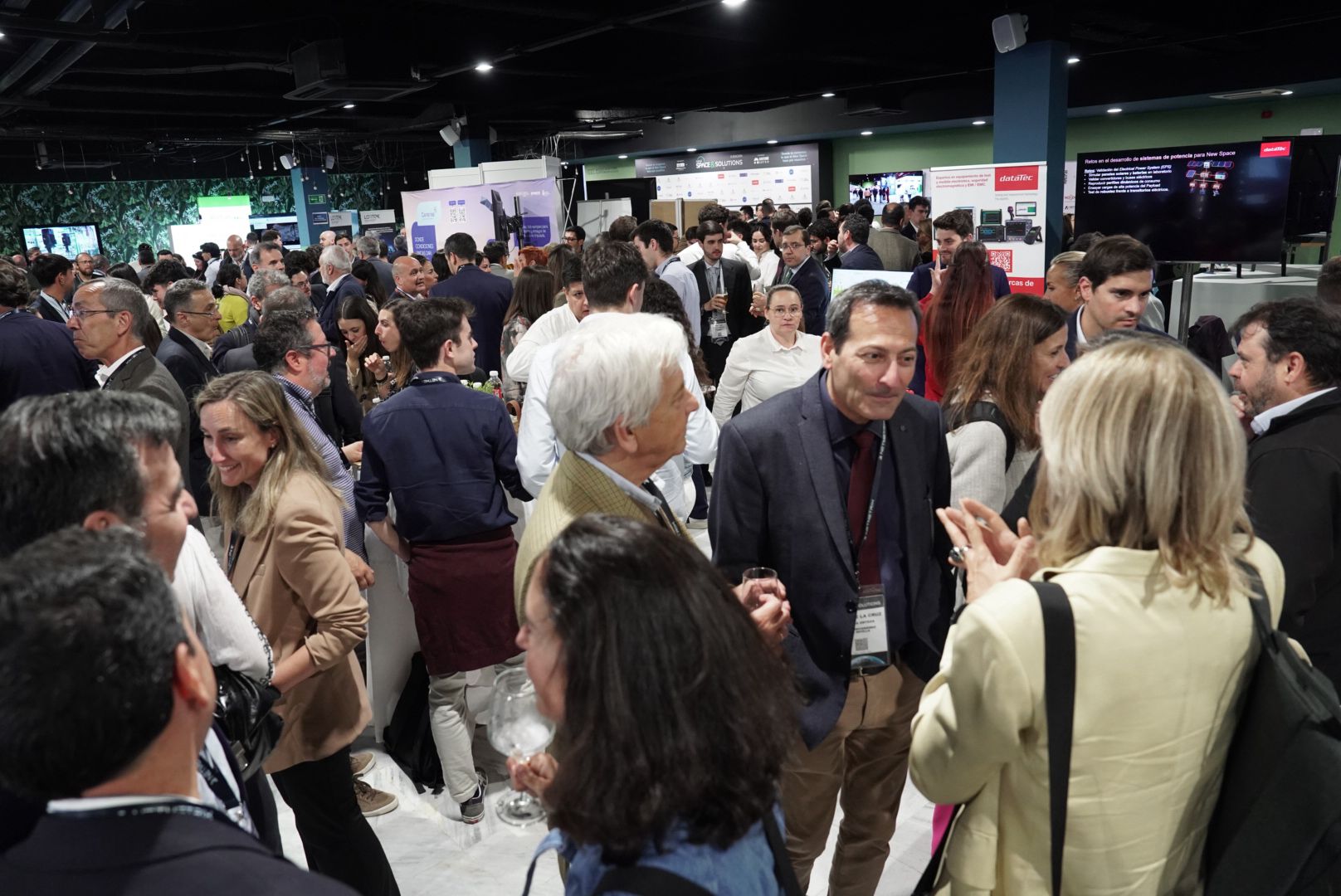
Networking area at the 2nd edition of New Space & Solutions.
This Wednesday, 15 April, the second in-person session of New Space & Solutions will take place at the Cartuja Auditorium, at Sevilla TechPark, with notable new participation from the Spanish Space Agency, NASA and the ESA, as well as companies and organisations from the space ecosystem such as CATEC, DAS Photonics, Open Cosmos, DEKRA, Kistler, Datatec, Quside, Systratec, Keplerkoord and Augusta Abogados, amongst others.
All the conferences from New Space & Solutions will be available to view on-demand via The Observatory, the digital platform of Medina Media Events, where each conferencecan be accessed free of charge, 24 hours a day, 365 days a year.
The second edition of New Space & Solutions is organised by Medina Media Events and is supported by Seville City Council; the Regional Ministry of Universities, Research and Innovation of the Regional Government of Andalusia; the Regional Ministry of Sustainability and the Environment; the Regional Ministry of Industry, Energy and Mines; Canary Islands Aerospace Strategy (Government of the Canary Islands); Netmetrix, Sceye, Datatec Instruments, Rohde & Schwarz, PCB Piezotronics, Pablo de Olavide University, CATEC, Isdefe, UARX, HALO Space, Kistler, Eurecat, DEKRA, Open Cosmos, Solar MEMS, B2Space, EM&E Group, Quside, Systratec, Keplerkoord, Augusta Abogados, Bufete Mas y Calvet, LORTEK, Flux, Metadev, NDK, Alfalite, the University of Málaga, EQA, the Polytechnic University of Valencia and Amplify, amongst others.