
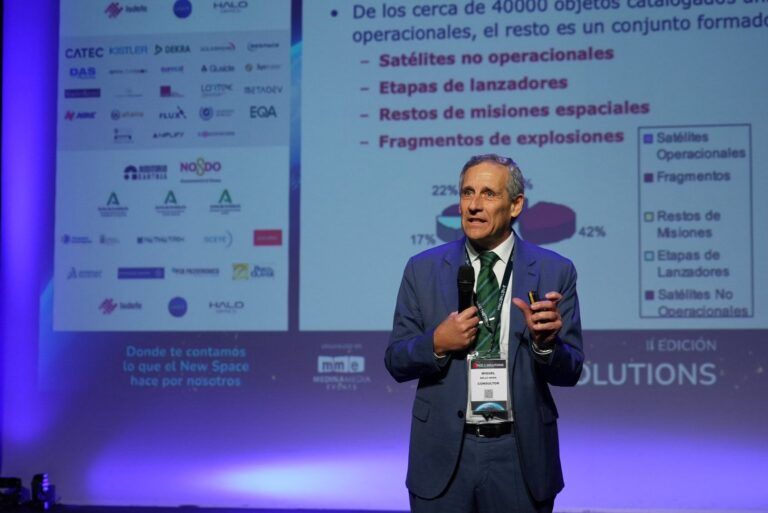
- Expert consultant Miguel Belló highlighted the need for constant space surveillance and for a technological response to threats, with mitigation measures such as deorbiting satellites or moving them to graveyard orbits.
The afternoon session of the second day of New Space & Solutions, held at the Cartuja Auditorium – managed by Yventu – at Sevilla TechPark, addressed the major challenges and opportunities facing the space sector from a technological, industrial and security perspective. The day was marked by the presentation by expert Miguel Belló, as well as the prominence of innovative solutions in fields such as connectivity, robotics, cybersecurity and space traffic management.
One of the highlights was the presentation by Miguel Belló, Commissioner for the Aerospace PERTE at the Ministry of Science and Innovation between 2022 and 2023 and currently an expert consultant, who warned that, although space is essential to our daily lives, it also poses growing threats that require vigilance and technological responses, particularly in areas such as space debris and the risk of asteroid impacts. In this regard, he warned that “we are increasingly concerned about space debris and also the potential impacts of asteroids or comets on Earth”, emphasising the need to strengthen tracking systems and international regulation to prevent collisions, uncontrolled re-entries or the so-called Kessler syndrome.
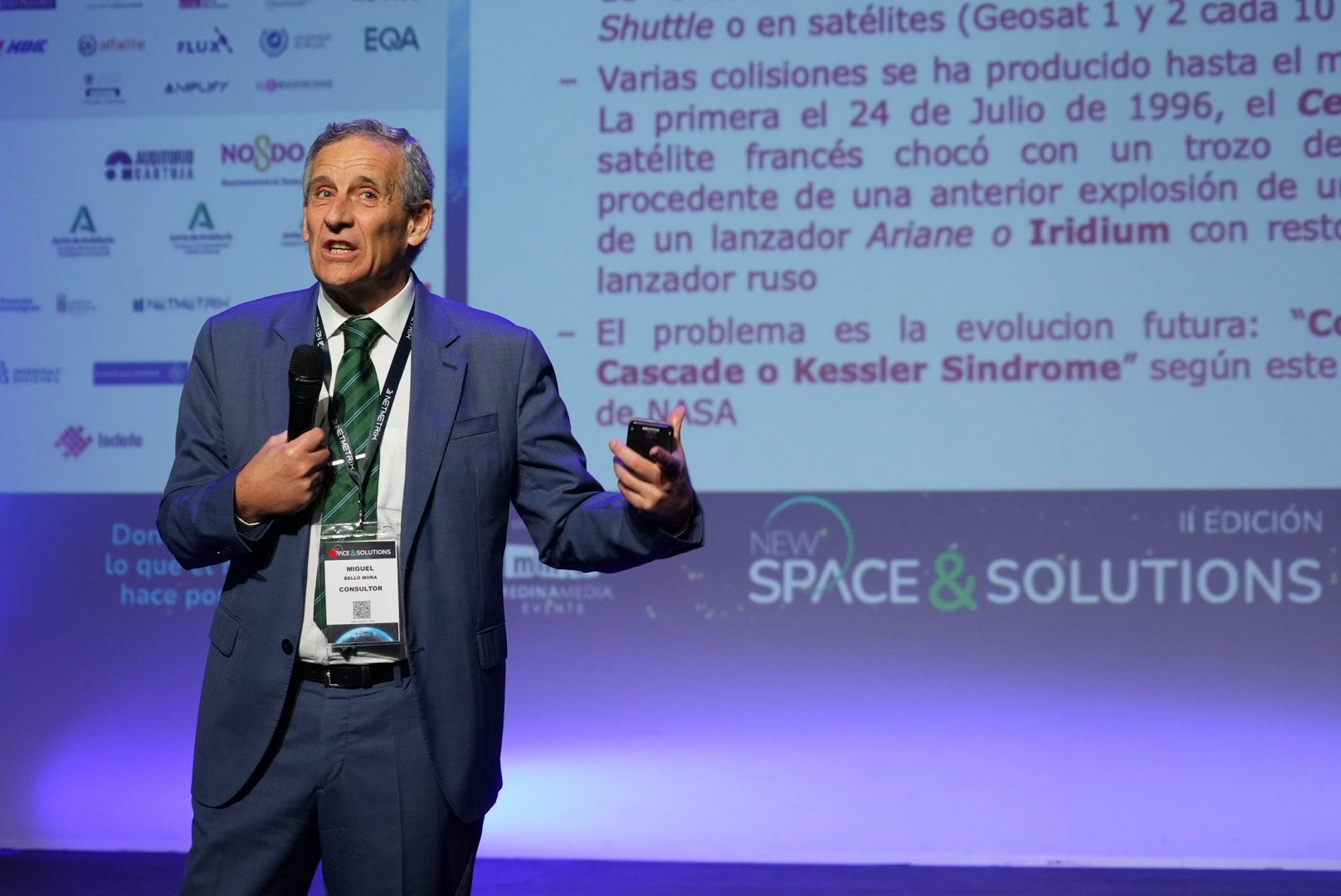
Furthermore, when discussing mitigation measures — such as deorbiting satellites or moving them to graveyard orbits — he noted that “being environmentally conscious in space is expensive, but it is necessary”, highlighting the economic cost of these solutions, but also their essential nature in ensuring orbital sustainability. At the same time, he highlighted that Spain holds a leading position in this field and argued that “we have the technology to solve these issues”.
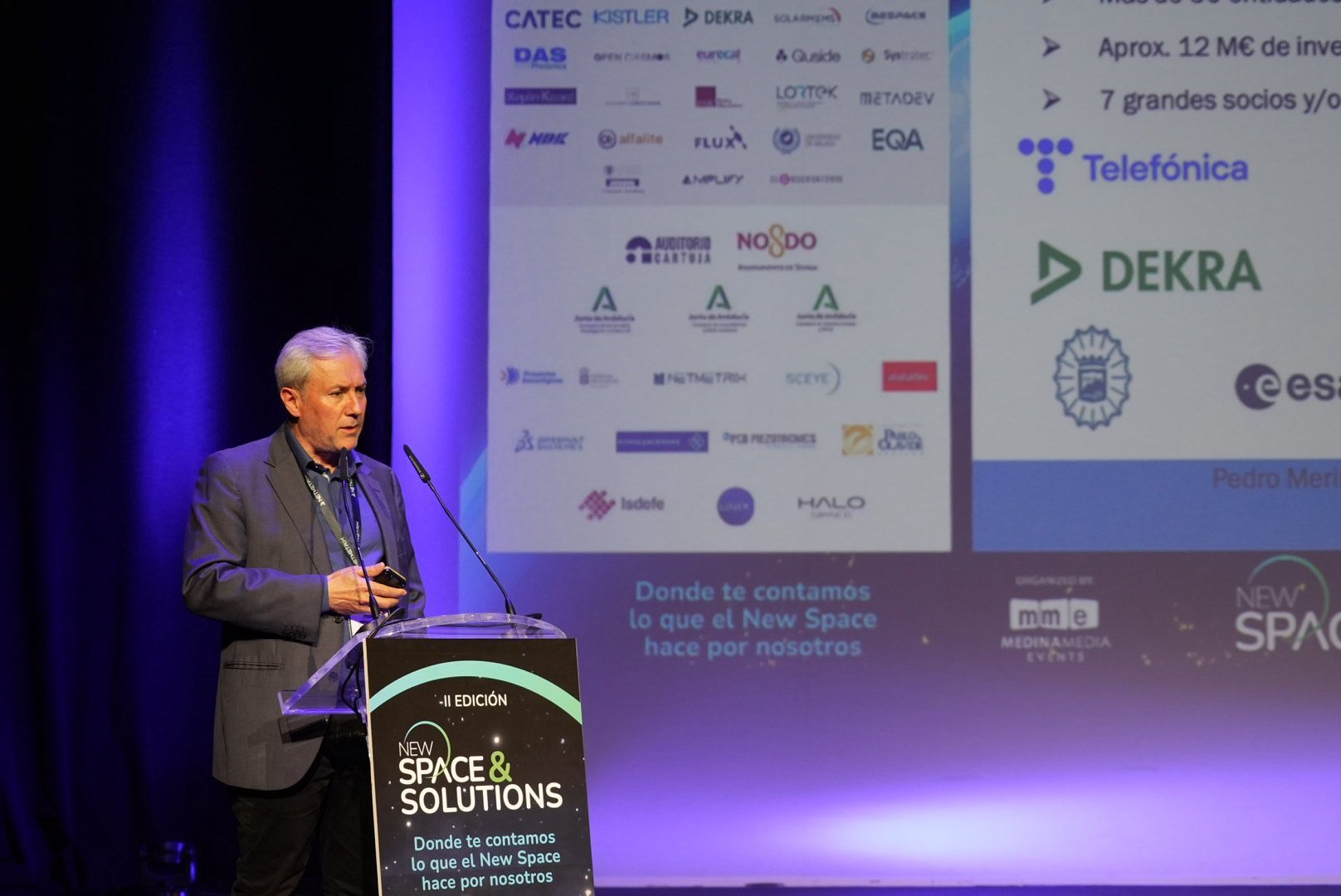
In the technological sphere, the session moved on to the trends that will shape the future of communications. Pedro Merino, director of the Institute of Software Technology and Engineering at the University of Málaga, explained the progress towards the integration of 5G with satellites as one of the major trends in the sector, highlighting that “the idea is to talk about 5G via satellite, one of the main lines of development for this technology”. He also emphasised the aim of ensuring continuous connectivity, stating that “when a mobile phone loses terrestrial coverage, it can connect directly to 5G satellite coverage”, which opens up new opportunities in areas such as emergencies, defence and rural environments.
For his part, Aníbal Ollero, Director of the GRVC Robotics Lab at AICIA, University of Seville, highlighted the growing threat of space debris, noting that “space debris is an ever-increasing threat to any mission in orbit” and presenting innovative solutions such as the European STRATOLASER project, which involves using lasers from stratospheric balloons to deorbit debris. He also highlighted Seville’s international leadership in this field, stating that “we are truly international leaders in autonomous aerospace systems”.
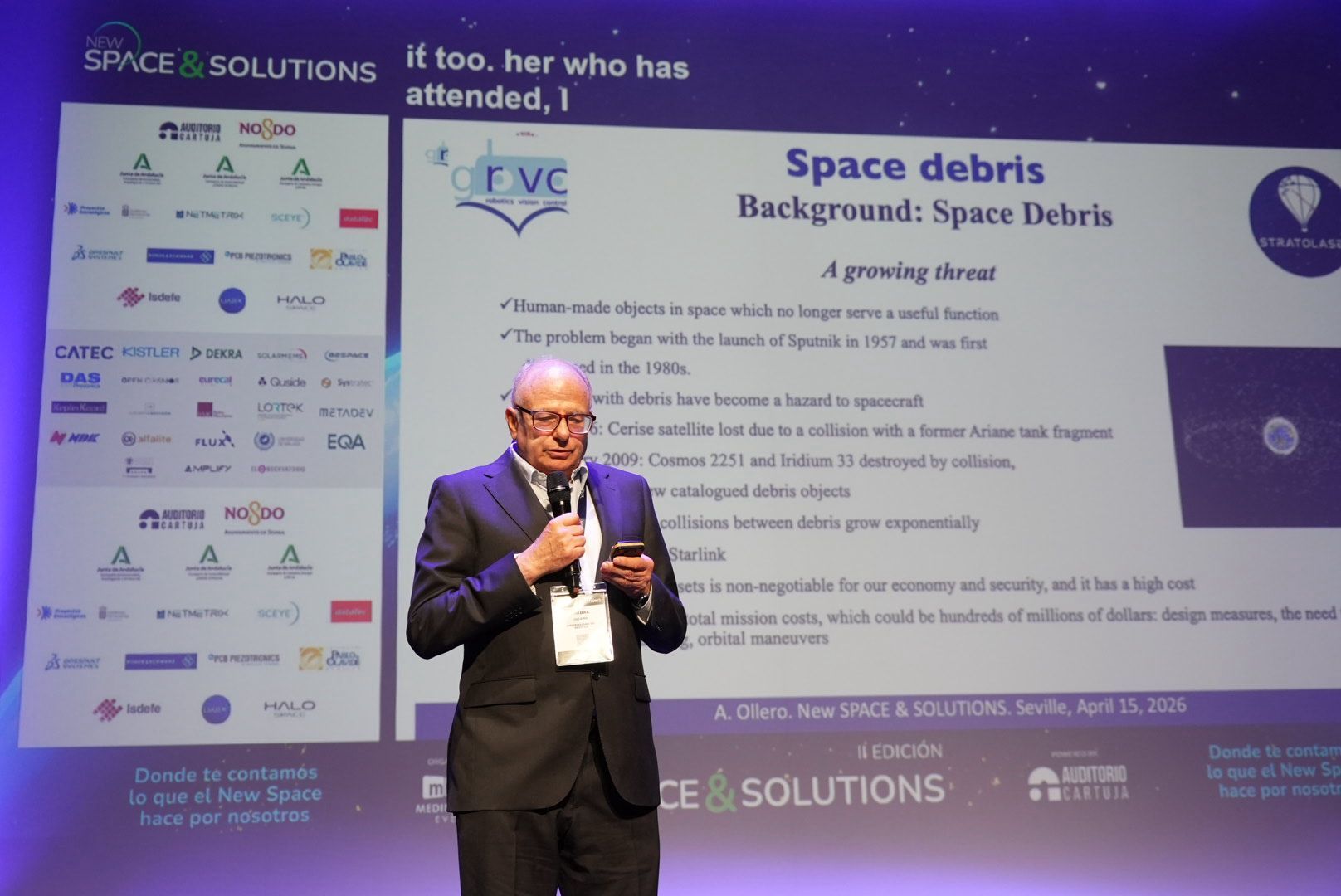
Aníbal Ollero, Director of the GRVC Robotics Lab at AICIA, University of Seville, during his participation in the 2nd Edition of New Space & Solutions.
The technology session continued with a presentation by Daniel Puentes Fermosel, Sales Director and Instrumentation Specialist at Datatec Instruments, who emphasised that “in the New Space sector, where development cycles are very short and technologies increasingly complex, companies and centres need to have a leading partner in instrumentation”. He also highlighted the importance of testing under real-world conditions at the , stating that “before launch, all systems must be thoroughly tested under operational conditions that simulate the space environment”.
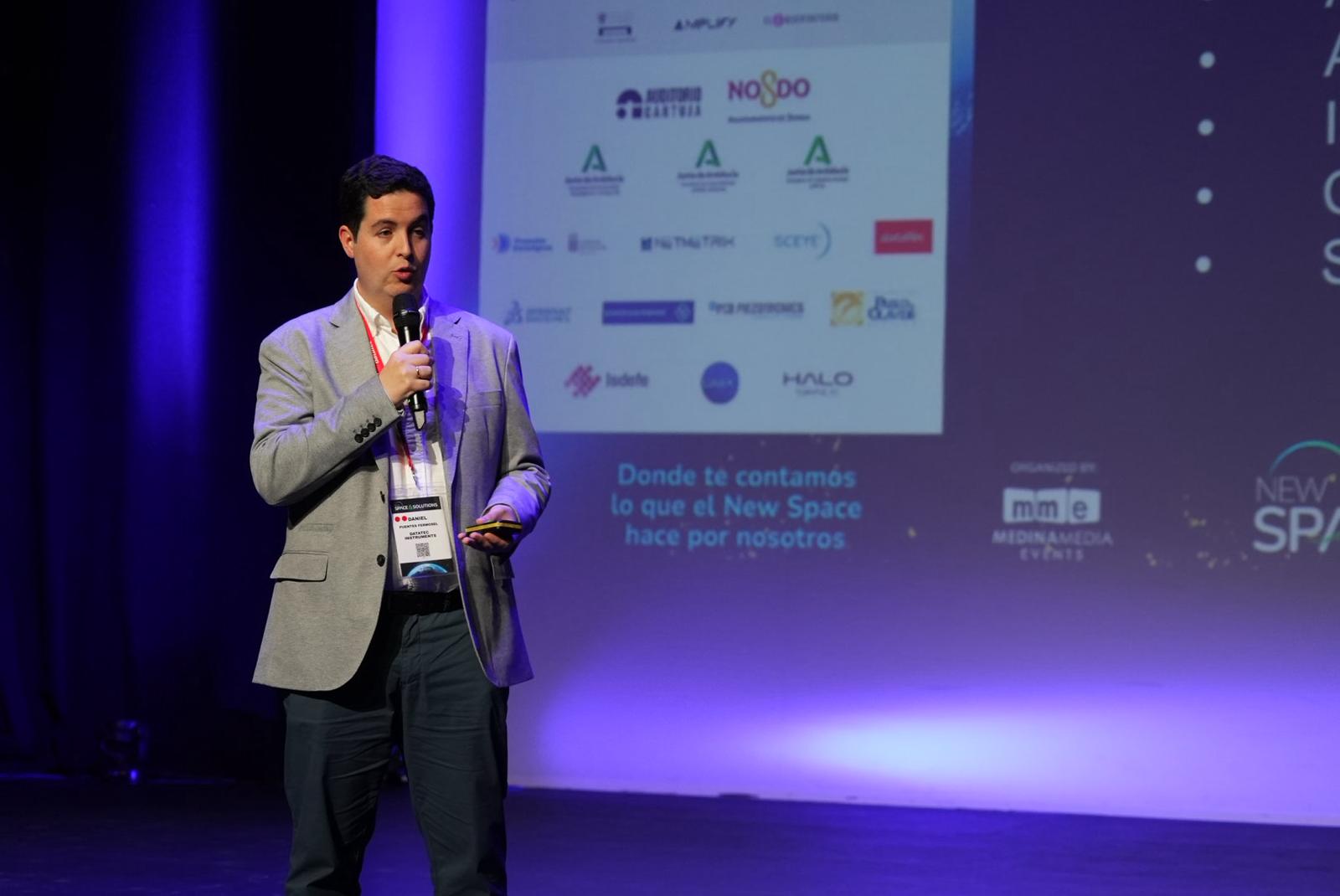
Daniel Puentes Fermosel, Sales Director and Instrumentation Specialist at Datatec Instruments, during his participation in the 2nd Edition of New Space & Solutions.
On the subject of security, Domenico Tulli, CTO at Quside, addressed the critical importance of entropy in space systems, noting that “entropy is the foundation of any security system” and warning that “if that entropy is poor or predictable, everything built on top of it is compromised”, highlighting the need to design systems using a ‘security by design’ approach.
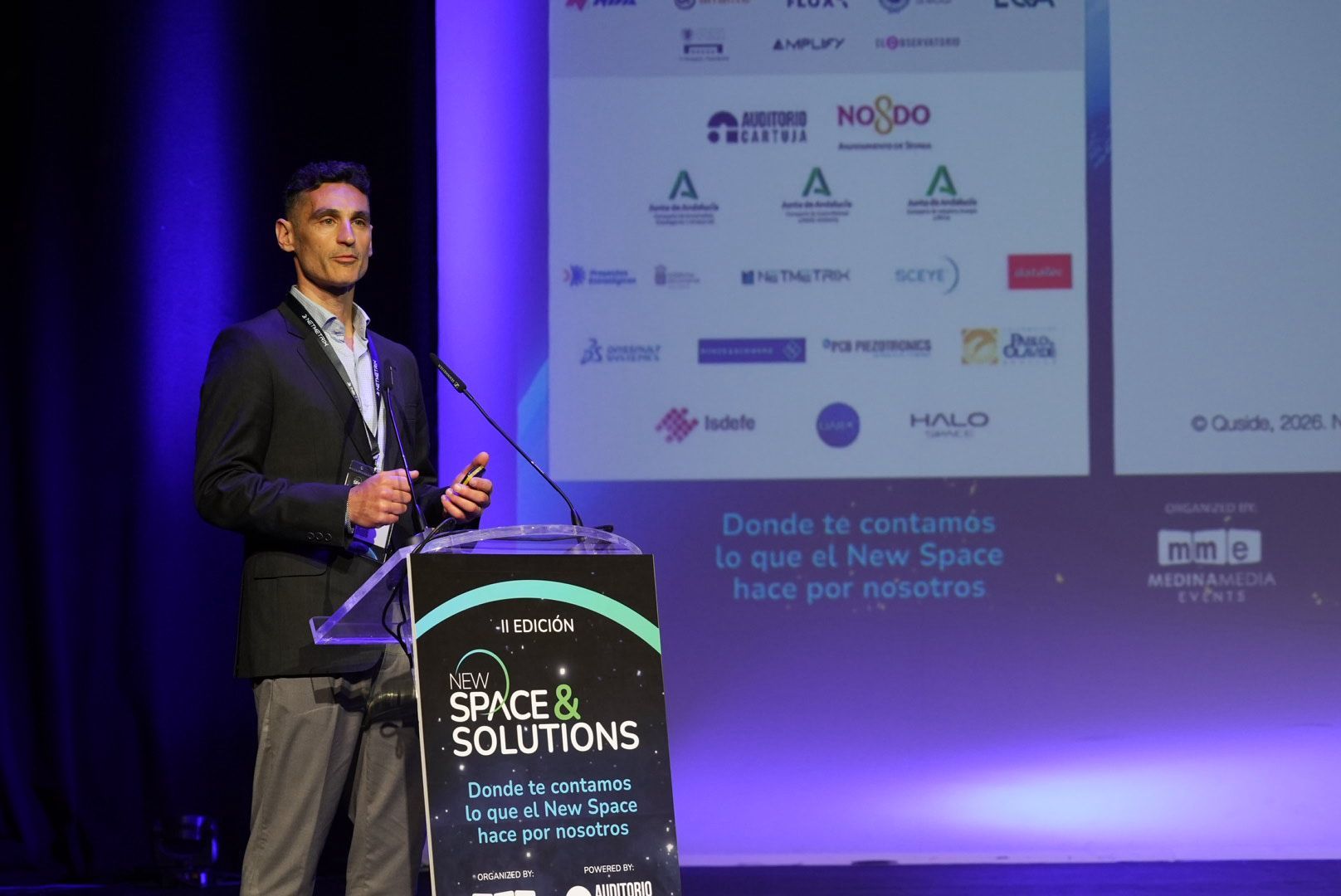
Domenico Tulli, CTO of Quside, during his participation in the 2nd Edition of New Space & Solutions.
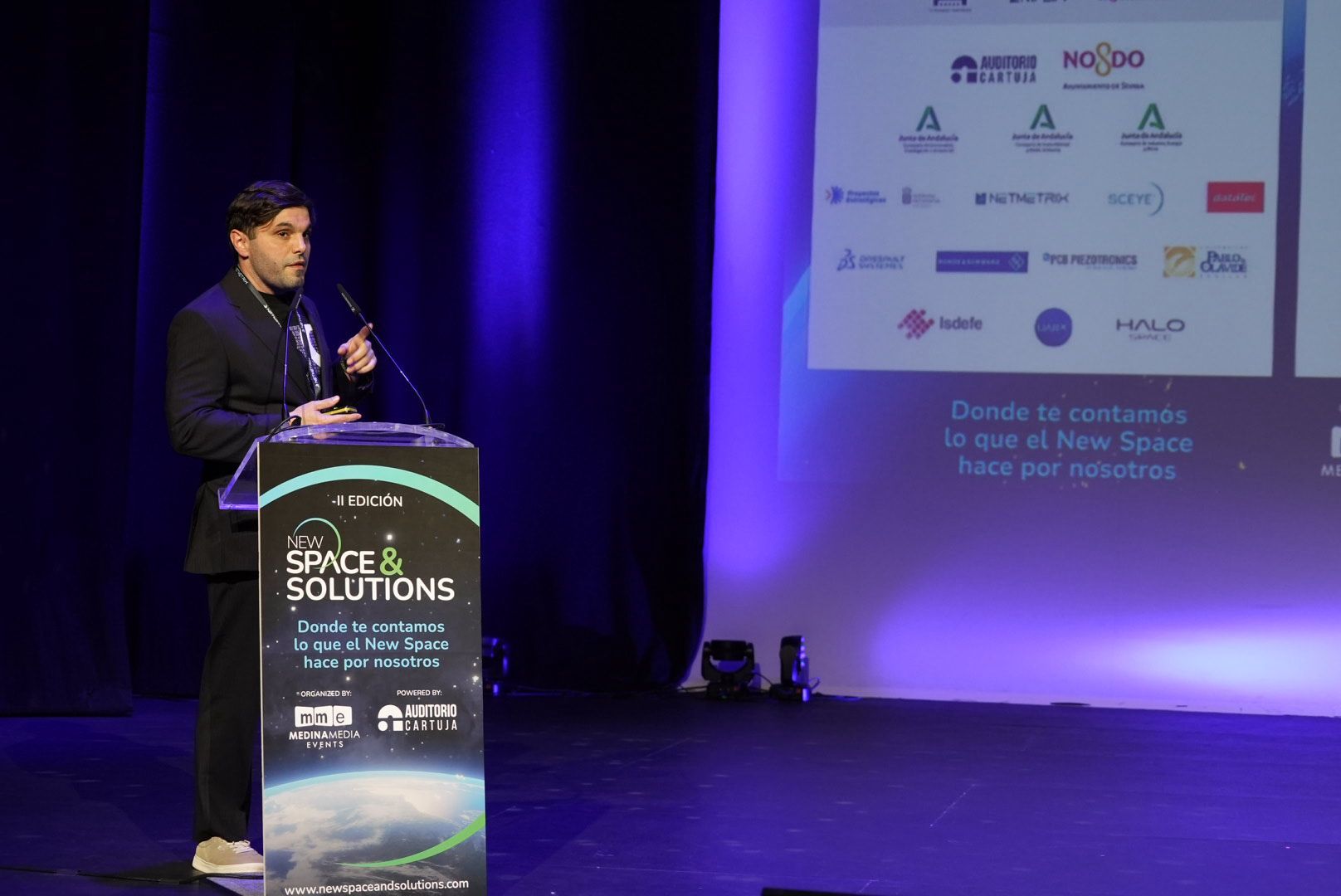
Innovation in navigation was another key theme, with the participation of Juan Andrés Gómez Ortiz, CTO of KeplerKoord, who presented a new frequency-based geodetic system, stating that “we have defined the first geodetic system in the frequency domain”. He also questioned the reliability of GPS in the current context: “Is it safe to navigate using GPS? Experience and current geopolitical tensions suggest not”, reinforcing the need for more resilient systems.
From a business perspective, Santiago Méndez, CEO of Systratec, highlighted the importance of customer-focused innovation, noting that “every product is open to improvement until it leads to the total and utter ruin of its owner”, and advocating for more efficient models that are better aligned with the market.
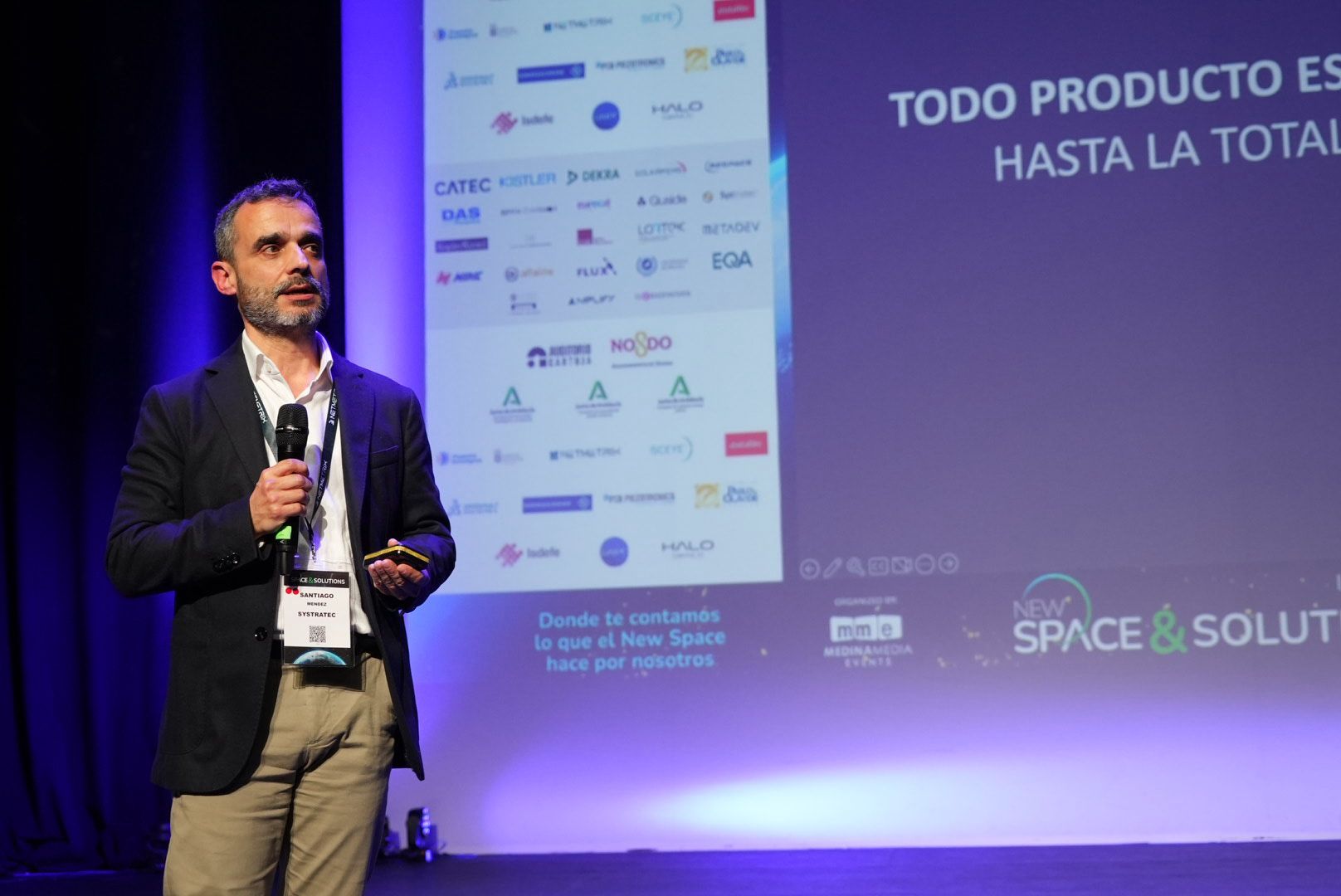
Santiago Méndez, CEO of Systratec, during his participation in the 2nd edition of New Space & Solutions.
Along the same lines, Pedro J. Molina, founder of Metadev, highlighted the importance of global cooperation, stating that “this cannot be achieved by a single company, a single space agency, or a single country”, and emphasising that “the key word is interoperability”.
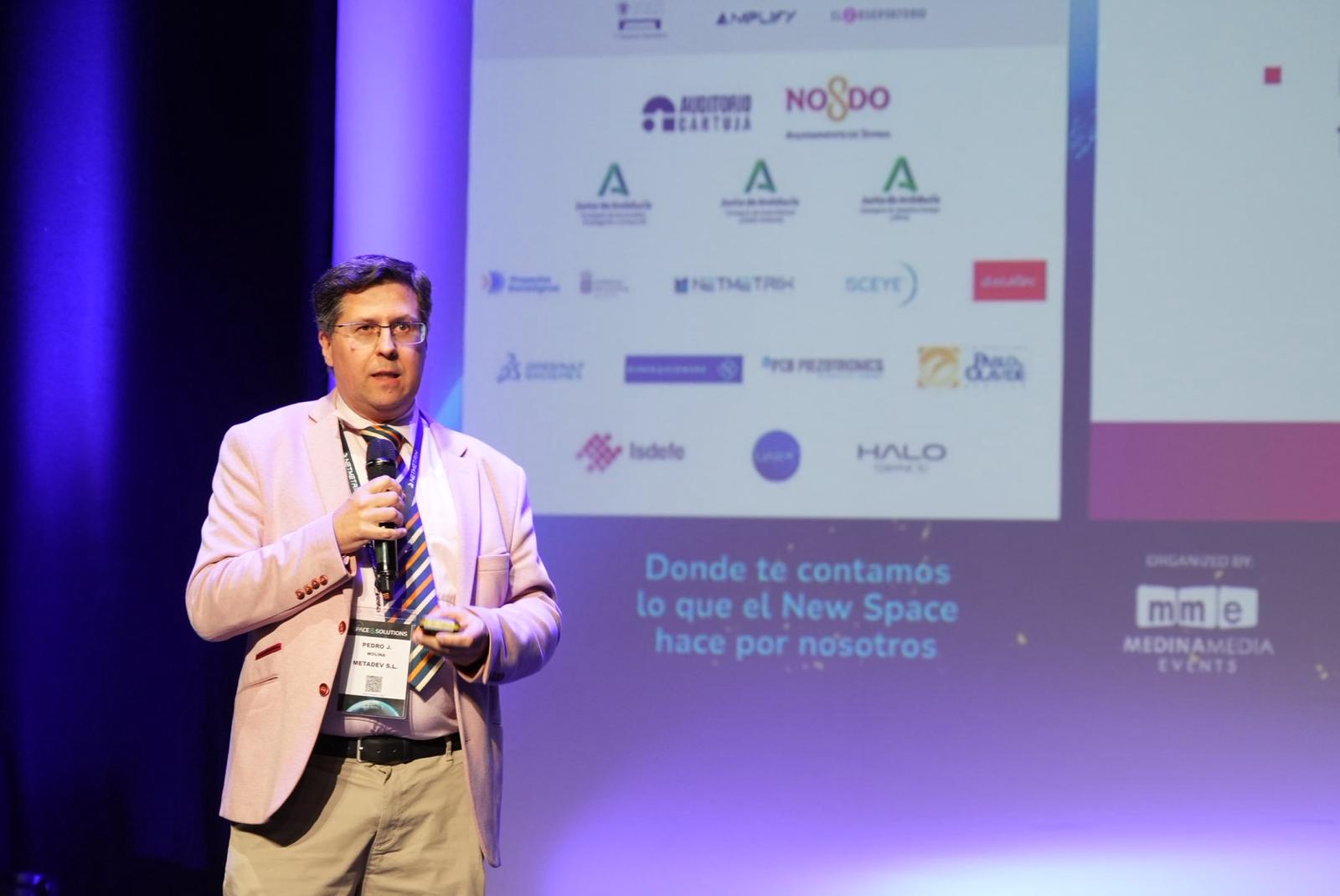
Pedro J. Molina, founder of Metadev, during his participation in the 2nd Edition of New Space & Solutions.
The session also addressed the challenges of scalability in New Space, led by Gisela Santillana, Director of New Business at Dassault Systèmes, who noted that “it has never been easier to launch a company, but neither has it ever been so difficult to scale it up”; Laura Marzal, Head of Sales for Iberia at Dassault Systèmes, who explained that “companies that manage to integrate design, simulation and collaboration into a single platform are the ones that are really making a difference”; and Jeremy Fourest, Solution Architect at Dassault Systèmes, who highlighted the importance of “digital continuity across different disciplines”.
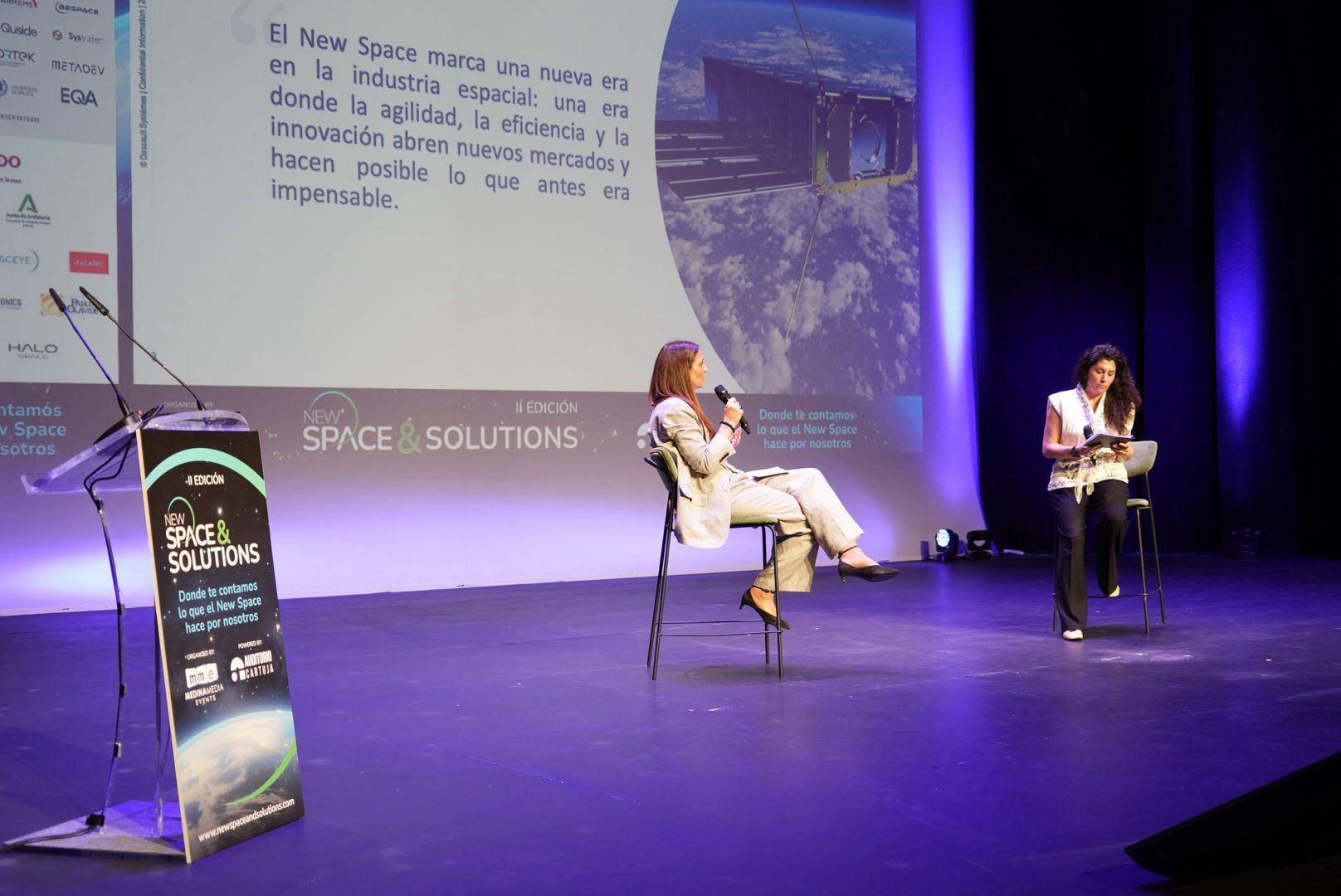
Laura Marzal, Head of Sales for Iberia, and Gisela Santillana, Director of New Business, Dassault Systèmes, during their participation in the 2nd Edition of New Space & Solutions.
On the panel ‘The Spanish industry in the new space age: positioning, challenges and opportunities’, Jon Guinea, Public Policy Manager for Space at Amazon Spain, highlighted that “we are experiencing a very promising time for Spain and Europe in the space sector”; Domenico Tulli, CTO at Quside, stressed that “we have a competitive advantage that must be exploited with the support of the institutions”; and Ana Peláez, Director at Maxwell Technologies (Televés Group), warned that “we need to change our mindset and commit to agility and industrialisation”, adding that “if we do not all work together, Europe is doomed”.
During the panel discussion ‘An Overview of the Space Sector in Andalusia’, moderated by Melanie Durth, the growth of the regional ecosystem was highlighted. Speakers included David Núñez, Director of the Hi-Rel Semiconductors Division at Alter Technology, who noted that “there is no single formula; we must adapt to each mission”; José Miguel Moreno, CEO of Solar MEMS, who emphasised that “98% of our output is exported and we have a presence in over 50 countries”; and Miguel Ángel Jiménez, representative of Aytana, who argued that “we must position SMEs within major international programmes”.
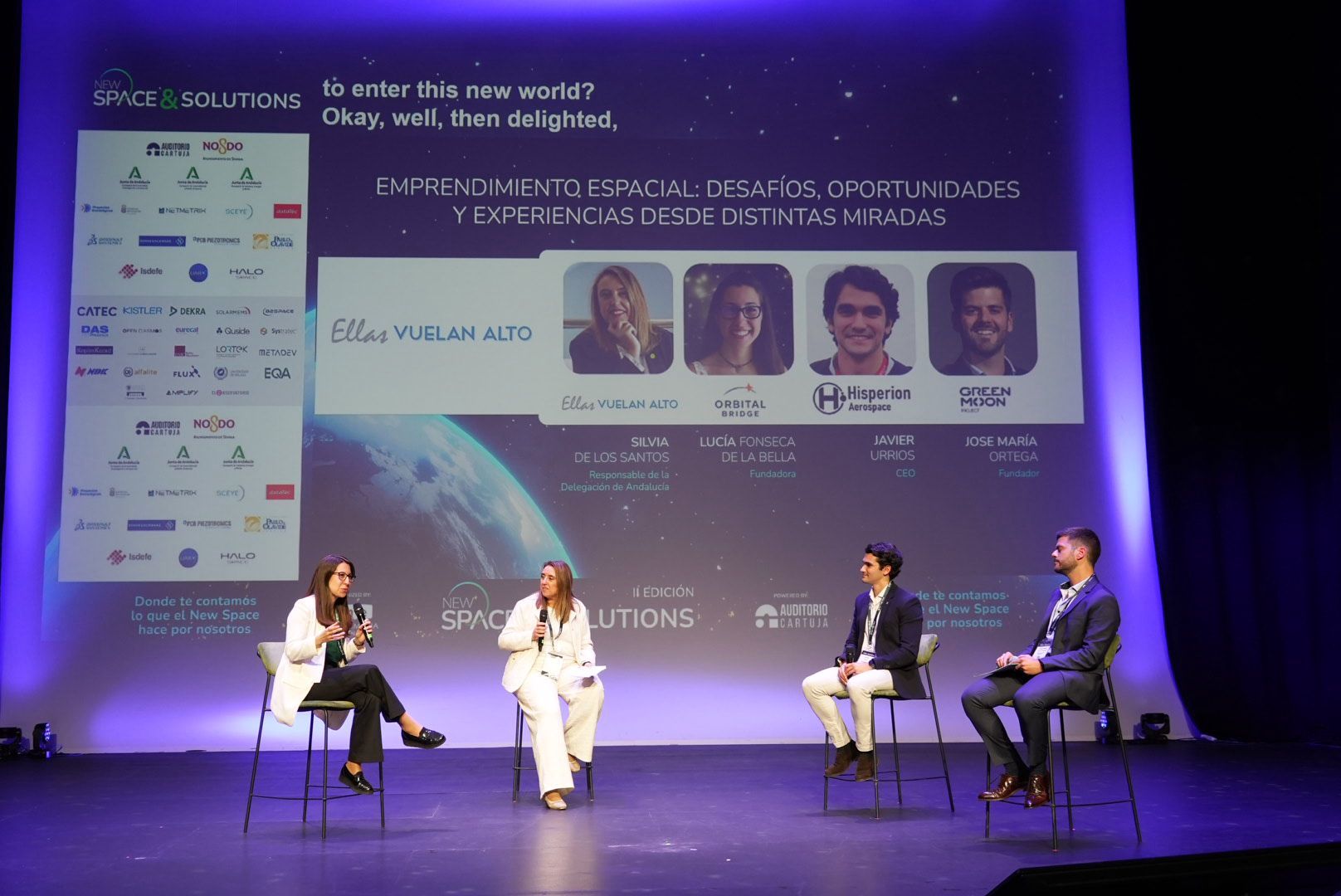
Panel ‘Space Entrepreneurship: Challenges’ held during their participation in the 2nd Edition of New Space & Solutions.
Finally, the panel ‘Space Entrepreneurship: Challenges, Opportunities and Experiences from Different Perspectives’, organised by Ellas Vuelan Alto, focused on innovation and entrepreneurship with Lucía Fonseca de la Bellas, founder of Orbital Bridge, who stated that “we are translators, we are facilitators; we really are that bridge”; Javier Urrios, CEO of Hisperion Aerospace, who noted that “if you see a problem, take the initiative, create a solution”; and José María Ortega, founder of the Green Moon Project, who argued that “we only live once and we must also come up with crazy ideas and put them into practice”.
All the conferences from New Space & Solutions will be available to watch on demand via The Observatory, the digital platform of Medina Media Events, where each conference can be viewed free of charge, 24 hours a day, 365 days a year.
The second edition of New Space & Solutions is organised by Medina Media Events and is supported by Seville City Council; the Regional Ministry of Universities, Research and Innovation of the Regional Government of Andalusia; the Regional Ministry of Sustainability and the Environment; the Regional Ministry of Industry, Energy and Mines; Canary Islands Aerospace Strategy (Government of the Canary Islands); Netmetrix, Sceye, Datatec Instruments, Rohde & Schwarz, PCB Piezotronics, Pablo de Olavide University, CATEC, Isdefe, UARX, HALO Space, Kistler, Eurecat, DEKRA, Open Cosmos, Solar MEMS, B2Space, EM&E Group, Quside, Systratec, Keplerkoord, Augusta Abogados, Bufete Mas y Calvet, LORTEK, Flux, Metadev, NDK, Alfalite, the University of Málaga, EQA, the Polytechnic University of Valencia and Amplify, amongst others.