
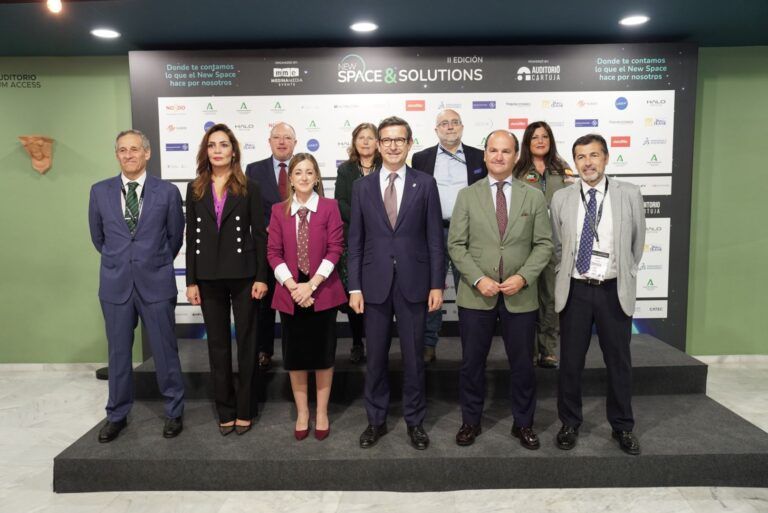
- The second day of the event brought together international leaders from the space sector, reinforcing Andalusia’s role as a strategic hub in the new space economy.
- Jorge Paradela, Regional Minister for Industry, Energy and Mines of the Andalusian Regional Government, opened the day by highlighting the region’s strong credentials for attracting investment and companies in the sector.
The second day of New Space & Solutions, held in person at the Cartuja Auditorium – managed by Yventu – at Sevilla TechPark, has consolidated the city’s position as one of the main hubs of the European space ecosystem. The morning session featured representatives from two of the world’s leading space agencies, NASA and the ESA, who discussed the progress of the Artemis II mission and the future of lunar exploration against a backdrop of growing international cooperation.
The event began with a speech by Jorge Paradela, Regional Minister for Industry, Energy and Mines of the Regional Government of Andalusia, who highlighted the current expansion of the space economy, emphasising that “New Space is a guarantee of progress and a colossal sphere of opportunities” for multiple sectors, ranging from health and agriculture to security and defence. He also highlighted the role Andalusia can play in this context, noting that the aerospace sector accounts for “almost 14% of our industrial GDP” and arguing that the region offers “the best conditions for attracting investment and companies in the sector”, thanks to its industrial base, its innovation ecosystem and the presence of the Spanish Space Agency in Seville.
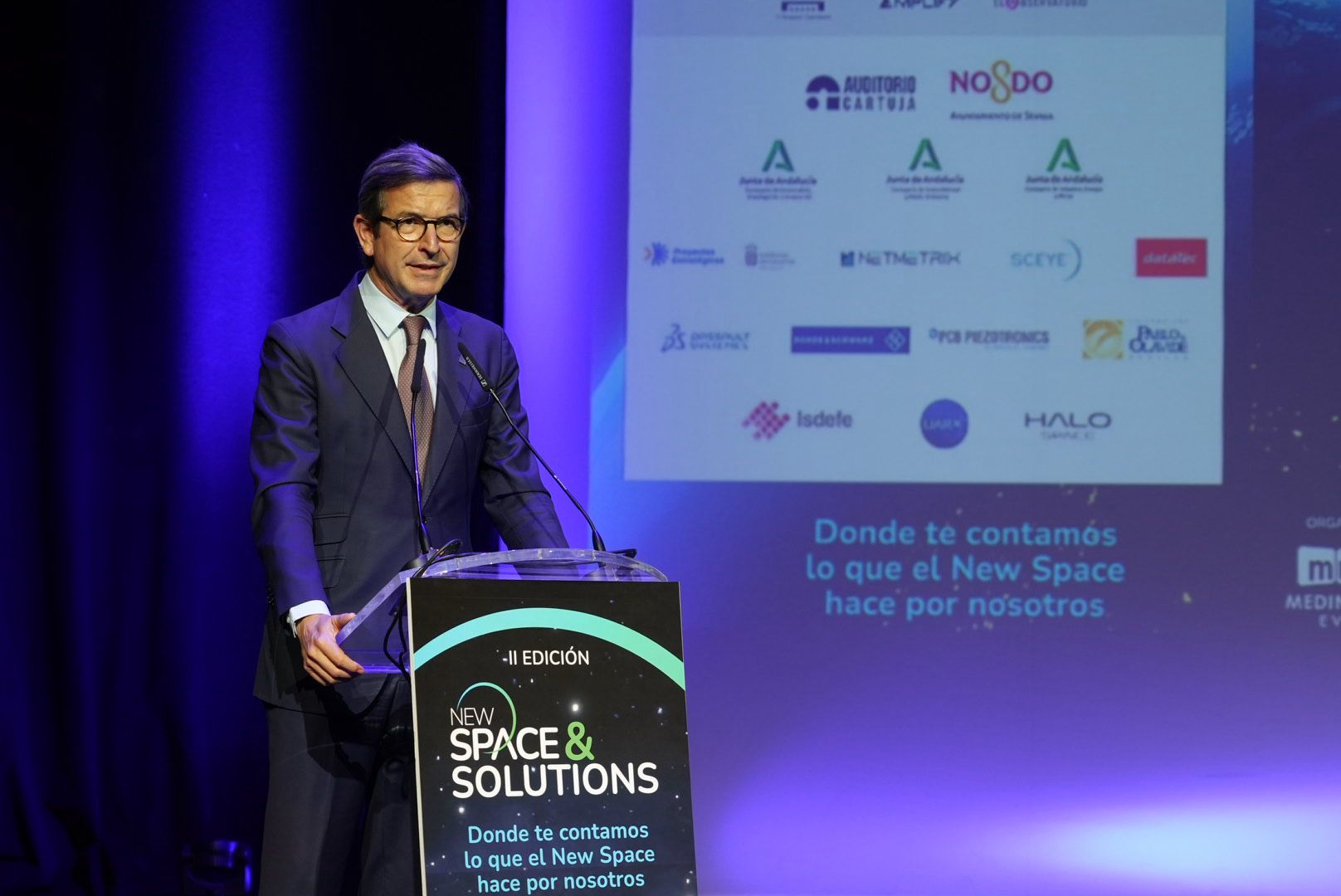
Jorge Paradela, Regional Minister for Industry, Energy and Mines of the Regional Government of Andalusia, during his participation in the 2nd edition of New Space & Solutions.
Artemis II lays the foundations for future missions to more distant destinations
Dylan Mathis, communications officer at NASA’s Office of External Relations, highlighted the historic moment space exploration is currently experiencing, citing this mission as an example, which he described as “the first time in 50 years that we have ventured beyond low Earth orbit” and a key achievement in reaching the greatest distance travelled by humans from Earth. He also emphasised the importance of international collaboration, acknowledging Europe’s role by stating that “this would not have been possible without the European Space Agency”. Looking ahead, he outlined NASA’s strategy to establish a sustainable presence on the Moon and pave the way for commercial space stations, stressing that “we cannot do this alone; we need international and commercial partners”. Finally, he highlighted the social impact of these missions: “We do this to come together and continue to grow as a human race.”
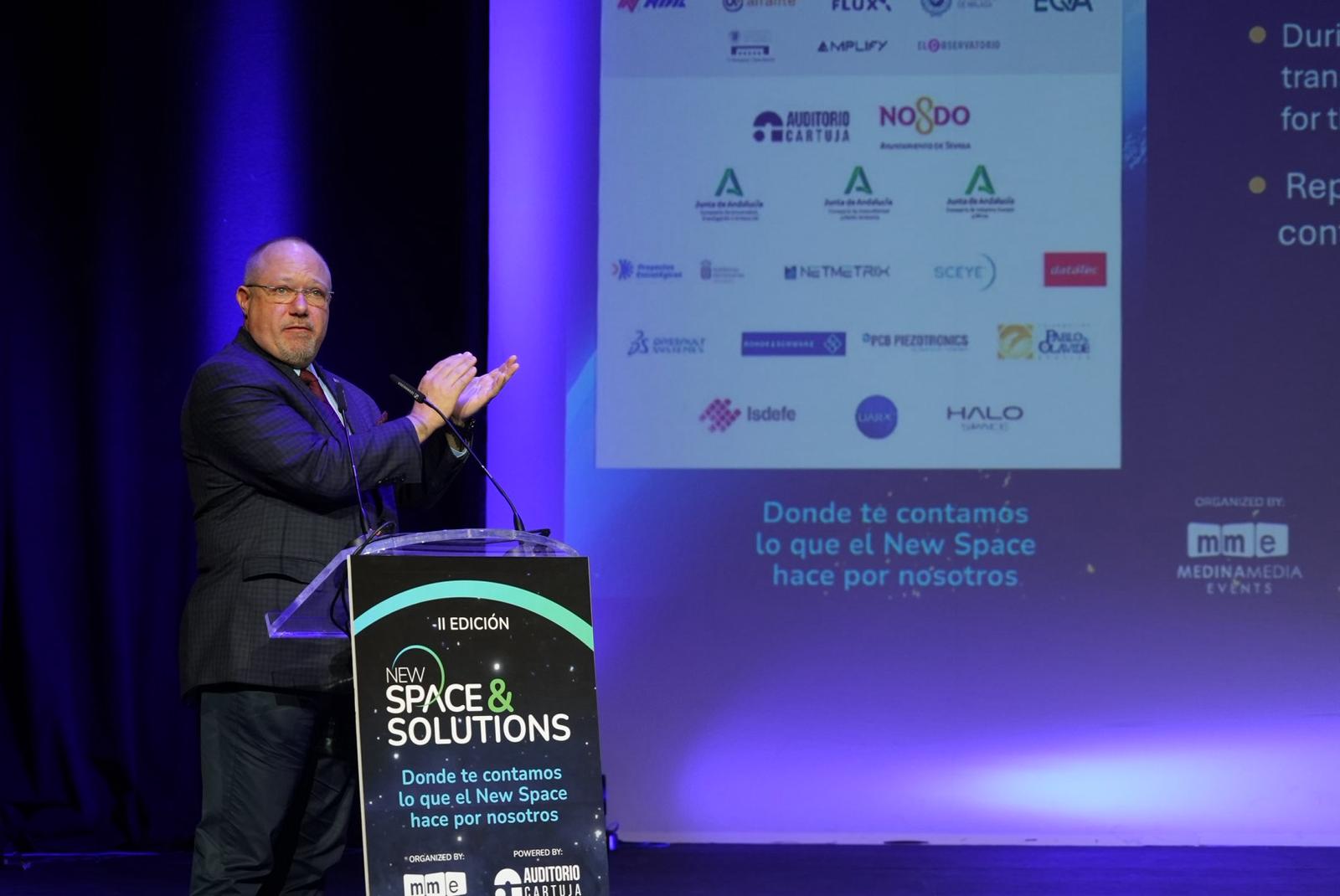
Dylan Mathis, communications officer at NASA’s Office of External Relations, during his participation in the 2nd edition of New Space & Solutions.
For his part, Guillermo González, head of production for the European Space Agency’s (ESA) European Segment Module (ESM) of the Orion spacecraft for Artemis II, explained the purpose and ambition of the Artemis programme, emphasising that “we are not going to the Moon as we did with Apollo; we are going there to stay, with the aim of establishing a sustainable presence and learning to live on another world”. He emphasised that this new phase represents a radical departure from the past, as the aim now is to “learn to use local resources and create the conditions for a lunar economy”, combining crewed and robotic missions. Furthermore, he highlighted Europe’s key role in the programme, noting that “NASA has entrusted the European Space Agency with building half of the Orion spacecraft”. Overall, he championed Artemis as a long-term international endeavour that will lay the foundations for future missions to more distant destinations, such as Mars.
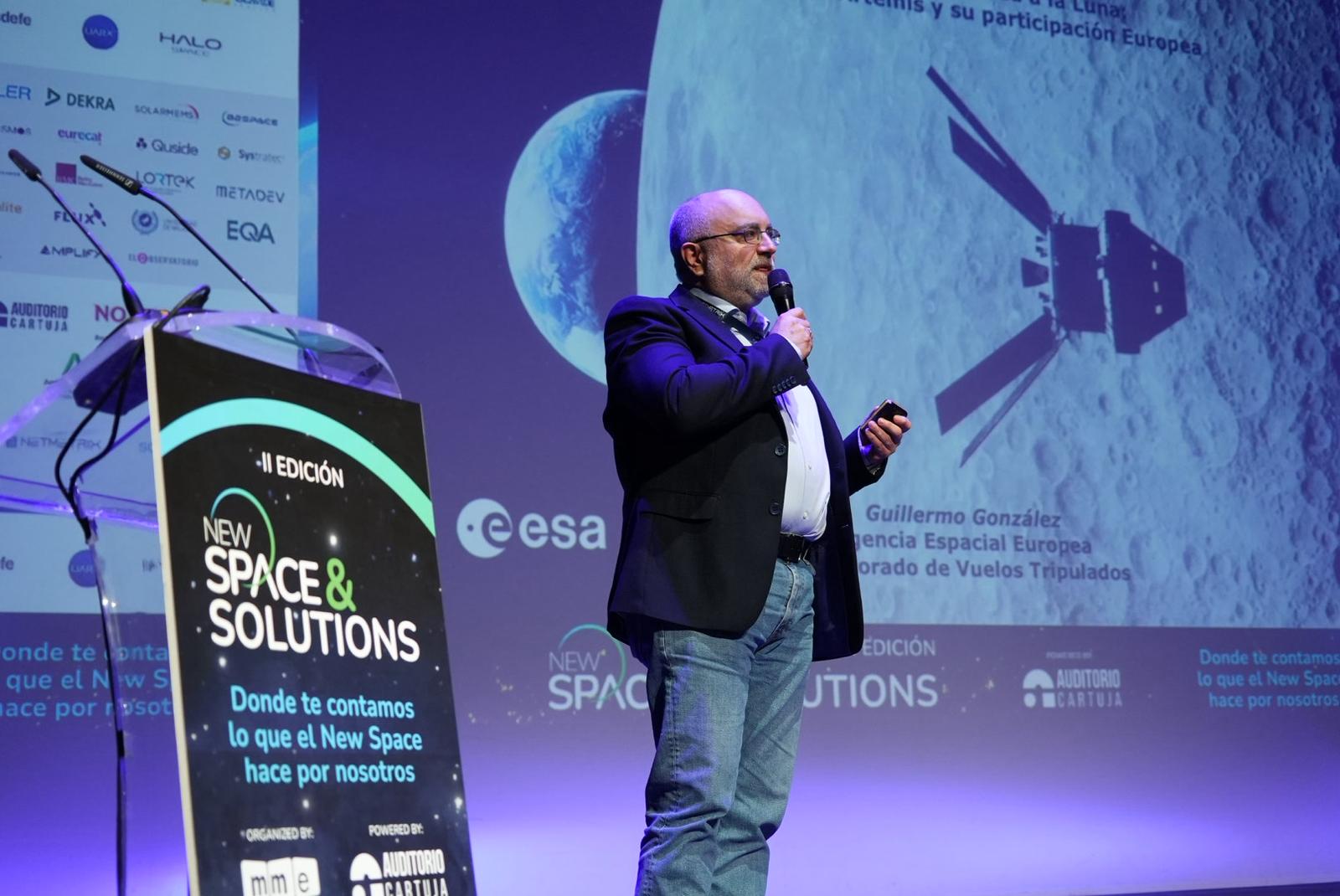
Guillermo González, production manager for the European module of the Orion spacecraft (ESM) for the European Space Agency’s (ESA) Artemis II mission, during his participation in the 2nd edition of New Space & Solutions.
In the same session, Adrián Mora Boluda, Columbus Flight Director at the German Aerospace Center (DLR), highlighted the complexity and precision required for the day-to-day operation of the International Space Station, explaining that “we have to cover 24 hours a day, 7 days a week, every day of the year”, to provide continuous support to the crew and all activities of the Columbus module. He also highlighted the key role of the European control centre in this coordination, noting that “we are the equivalent for the ESA of the Houston control centre”. Furthermore, he emphasised that behind this apparent normality lies a huge amount of training, planning and precise communication.
Need to adapt the regulatory framework to the new reality of the sector
Ana María Marín, Director of the Technical Office of the Director of the Spanish Space Agency, emphasised that “to speak of space regulation right now is to speak of responsibility, investment, national security and also sustainability”. In this regard, she warned that “the absence of clear rules is no longer neutral and poses a major risk”, arguing for the urgent need for a law on space activities that provides legal certainty. She also insisted that “the law cannot be an obstacle to the sector’s growth; it must be a lever that instils confidence in investors” and warned of challenges such as orbital congestion: “we cannot continue to act as if orbit were an unlimited resource”.
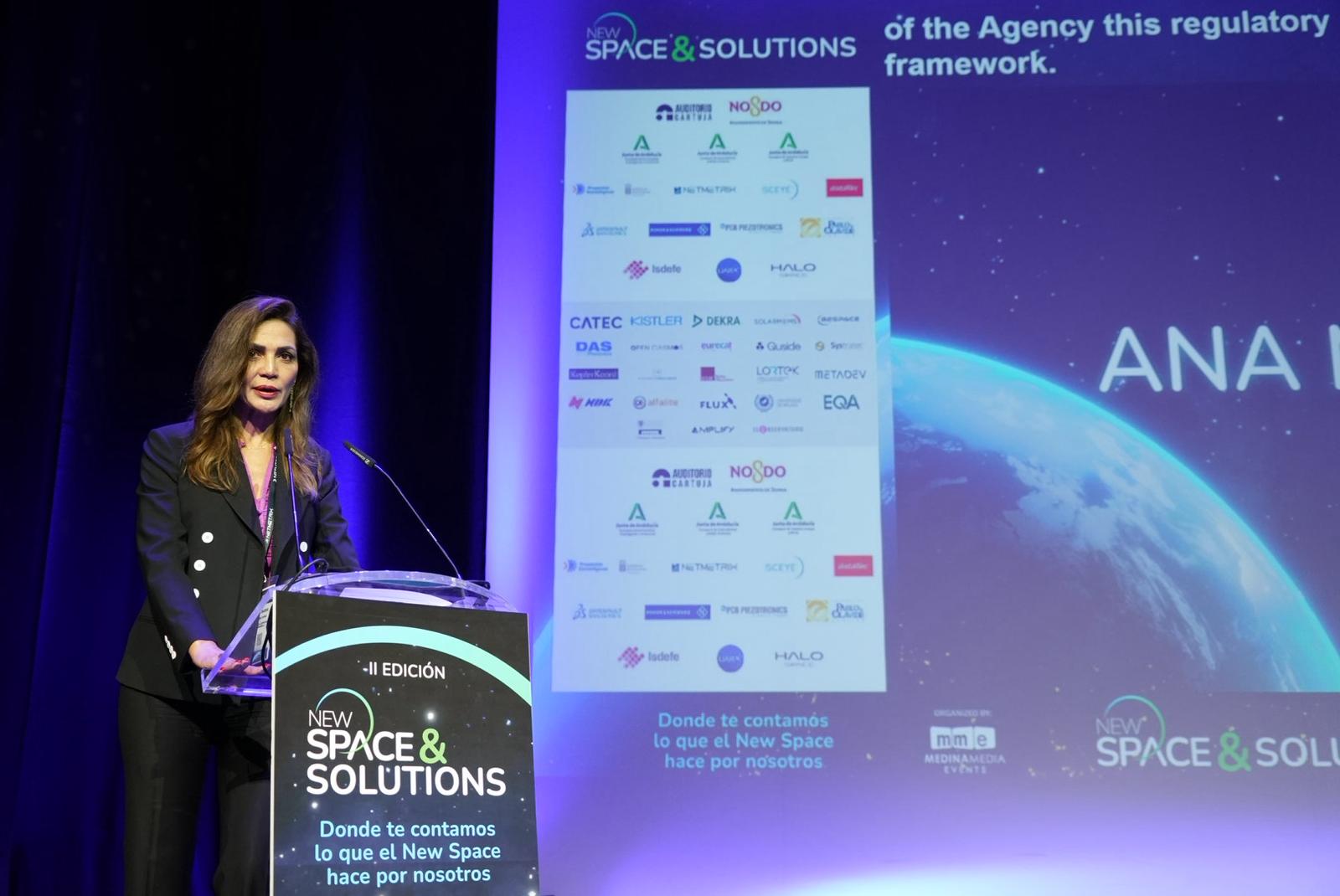
Ana María Marín, Director of the Technical Office of the Director of the Spanish Space Agency, during her participation in the 2nd Edition of New Space & Solutions.
Efrén Díaz Díaz, head of the Technology and Space Department at the Mas y Calvet law firm, addressed the challenge of dual-use in the space sector, highlighting that “all space activity is considered dual-use” and warning of the legal implications: “If we bypass these regulations, we will be committing an offence and even serious crimes”. He also pointed out that “dual-use does not by definition mean military use”, but requires responsible management.
Sergi Giménez, a partner at Augusta Abogados, analysed the complexity of future European regulations, noting that “it is so difficult to arrive at European regulations in this area because several layers of complexity converge”. Furthermore, he warned that “the regulations will be complex for some time to come” and that different regulatory levels will coexist, posing significant challenges for the sector’s development.
In the panel ‘New Space and environmental land management. Balancing supply and demand’, participants agreed on the need to transform satellite data into useful solutions for environmental management. María López Sanchís, Secretary General for the Environment and Climate Change at the Regional Ministry of Sustainability and the Environment of the Regional Government of Andalusia and moderator of the panel, summarised the aim of the debate by noting that it was about “matching supply and demand, and how we move from the provision of raw data to concrete solutions”. From the perspective of the public user, Arturo Fernández-Palacios, Technical Adviser to the General Secretariat for the Environment and Climate Change. REDIAM, , emphasised that “managers require very high precision and spatial resolution”, particularly in the face of emergencies such as fires or floods.
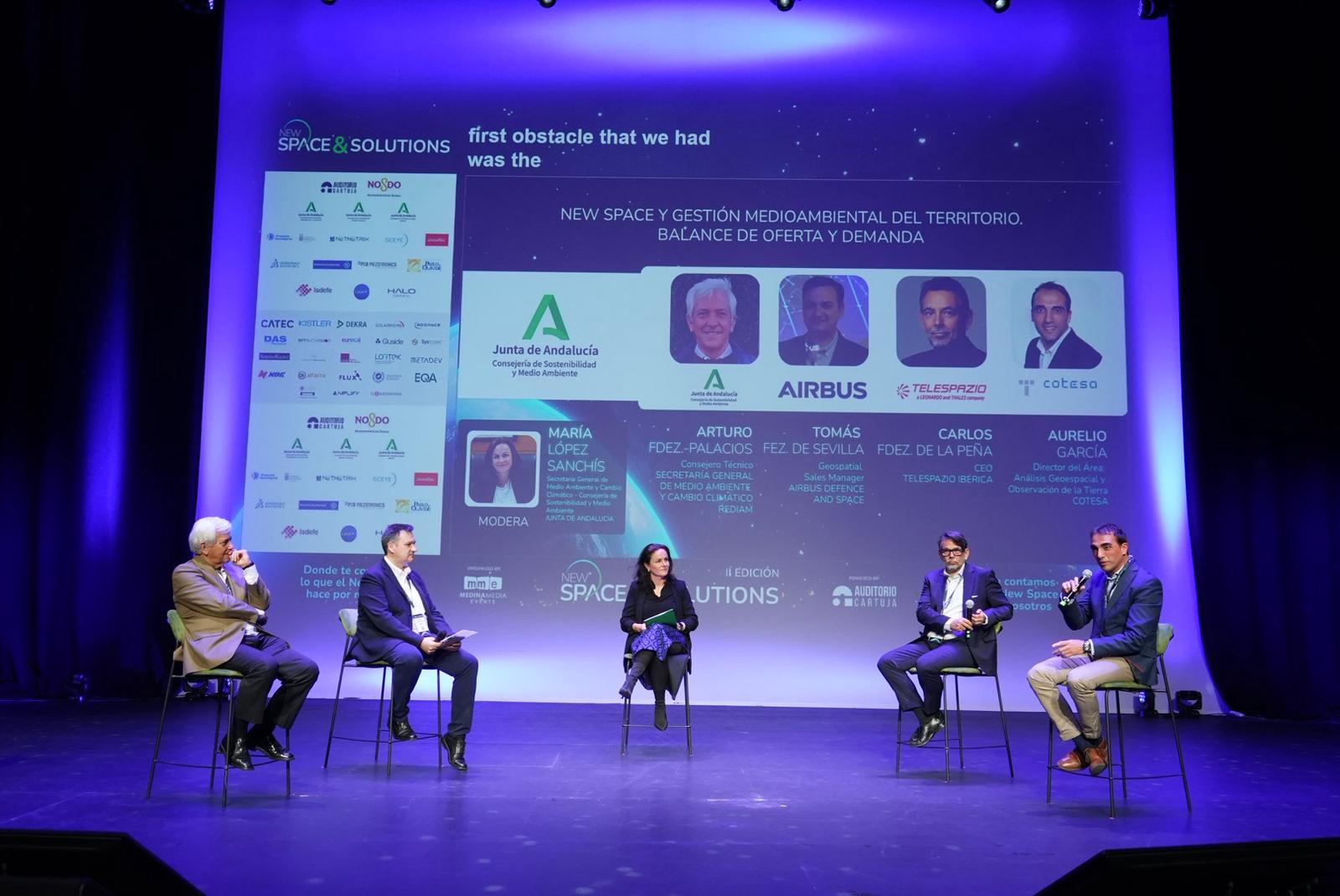
For his part, Tomás Fernández de Sevilla, Geospatial Sales Manager at Airbus Defence and Space, highlighted the current technological capabilities, stating that “in just 15 minutes we can have the image that has just been captured”, which is key to a rapid response. From the services sector, Aurelio García Rochera, Director of the Geospatial Analysis and Earth Observation Division at the Centre for Space Observation and Remote Sensing S.A.U. – COTESA, pointed out that the challenge is not merely to have data, but to ensure that “the data is operational, reliable and integrable”. Finally, Carlos Fernández de la Peña, CEO of Telespazio Ibérica, championed the role of public innovation as a driver for the sector, asserting that “Europe and Spain need far more innovative public procurement” to accelerate solutions and boost competitiveness.
The session continued with the presentation of advanced technological solutions. Miguel Ángel Trujillo, head of the Autonomous Systems Unit at CATEC, presented the BRISA drone as “a high-efficiency drone for capturing high-resolution data”, highlighting its capacity to carry out long-range missions and its value as a complement to satellite observation.
For his part, Javier Marti, CTO & Founder of DAS Photonics, emphasised the potential of photonic technology applied to space, noting that “size, weight and power consumption are significantly reduced”, enabling the development of more efficient and compact systems.
Aurelio Martí Ferrer, Business Development Manager at Open Cosmos, highlighted the importance of satellites in addressing global challenges, noting that the aim is “to obtain information as soon as possible in order to make decisions as quickly as possible”.
In the field of security, Antonio Vizcaíno, Cybersecurity Technical Sales Manager at DEKRA Spain, warned that “greater digitalisation means an increase in the attack surface”, emphasising the need to assess and certify the cybersecurity of systems.
Roberto D’Amico, Industry Lead Aerospace at Kistler, closed the morning session and highlighted collaboration and innovation as the driving forces behind the sector, noting that “we are achieving a level of precision never seen before”, which opens up new opportunities in the development of space technologies.
Prominent exhibition area featuring 18 organisations
All those attending New Space & Solutions continued to enjoy an outstanding exhibition area, where around twenty organisations showcased their key innovations and projects during the in-person event, offering a tangible insight into the potential of the New Space ecosystem. From the design of a VTOL drone presented by CATEC to cutting-edge solutions in resonators and quartz oscillators from Alfalite, including technology supplied by NDK, space sensors from Solar MEMS, solutions from Kistler, measurement instruments from Systratec, as well as technological offerings from Rohde & Schwarz, Lortek and PCB Piezotronics. The exhibition area also features Datatec’s validation capabilities, Open Cosmos’s data management platform, the specialist legal consultancy of Augusta Abogados, the research potential of Pablo de Olavide University, and the immersive experience presented by AstroEmociones. Furthermore, demonstrations are being held of applications developed by the Regional Ministry of Sustainability and the Environment of the Regional Government of Andalusia, such as INDIFO and INDICA, alongside projects such as CloudIA and AIDEA, as well as initiatives promoted by Seville City Council, the Regional Ministry of Industry, Energy and Mines, and the Canary Islands Aerospace Strategy, in addition to the FyCUS, VANTUS and Coheteros projects.
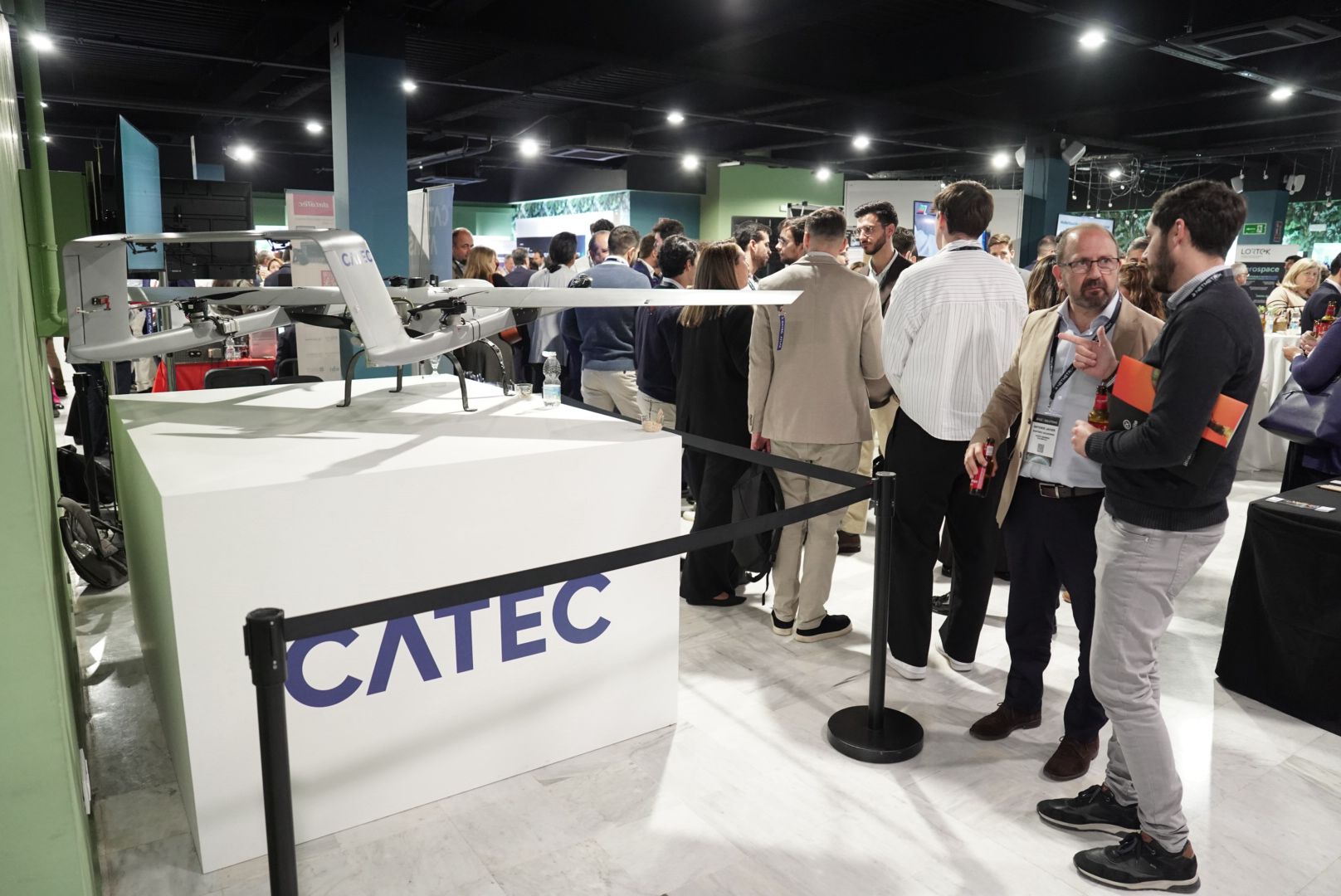
Networking zone and exhibition area at the 2nd edition of New Space & Solutions.
All the conferences from New Space & Solutions will be available to view on demand via The Observatory, the digital platform of Medina Media Events, where each conference can be accessed free of charge, 24 hours a day, 365 days a year.
The second edition of New Space & Solutions is organised by Medina Media Events and is supported by Seville City Council; the Regional Ministry of Universities, Research and Innovation of the Regional Government of Andalusia; the Regional Ministry of Sustainability and the Environment; the Regional Ministry of Industry, Energy and Mines; Canary Islands Aerospace Strategy (Government of the Canary Islands); Netmetrix, Sceye, Datatec Instruments, Rohde & Schwarz, PCB Piezotronics, Pablo de Olavide University, CATEC, Isdefe, UARX, HALO Space, Kistler, Eurecat, DEKRA, Open Cosmos, Solar MEMS, B2Space, EM&E Group, Quside, Systratec, Keplerkoord, Augusta Abogados, Bufete Mas y Calvet, LORTEK, Flux, Metadev, NDK, Alfalite, the University of Málaga, EQA, the Polytechnic University of Valencia and Amplify, amongst others.