
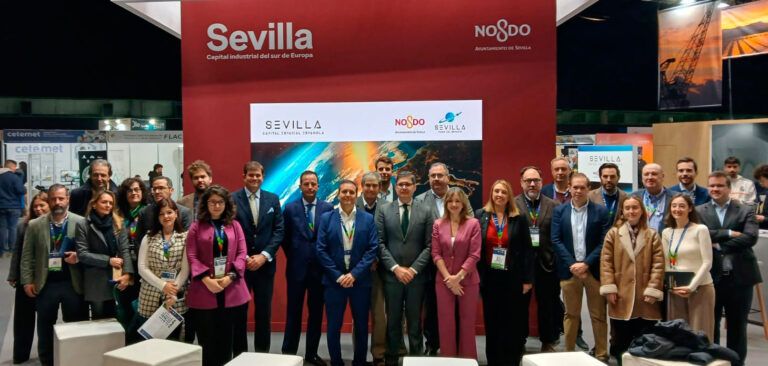
- “Seville is already the Spanish space capital and one of the major aerospace cities in Europe,” said Álvaro Pimentel, deputy mayor and delegate for the Economy of Seville City Council.
- The second edition of New Space & Solutions, to be held from 14 to 17 April 2026, will bring together space agencies, astronauts, universities and companies to address the major challenges of the new space economy.
- The first edition, held in March 2025, brought together 590 participants and 313 entities from 18 countries, including a historic connection with the International Space Station.
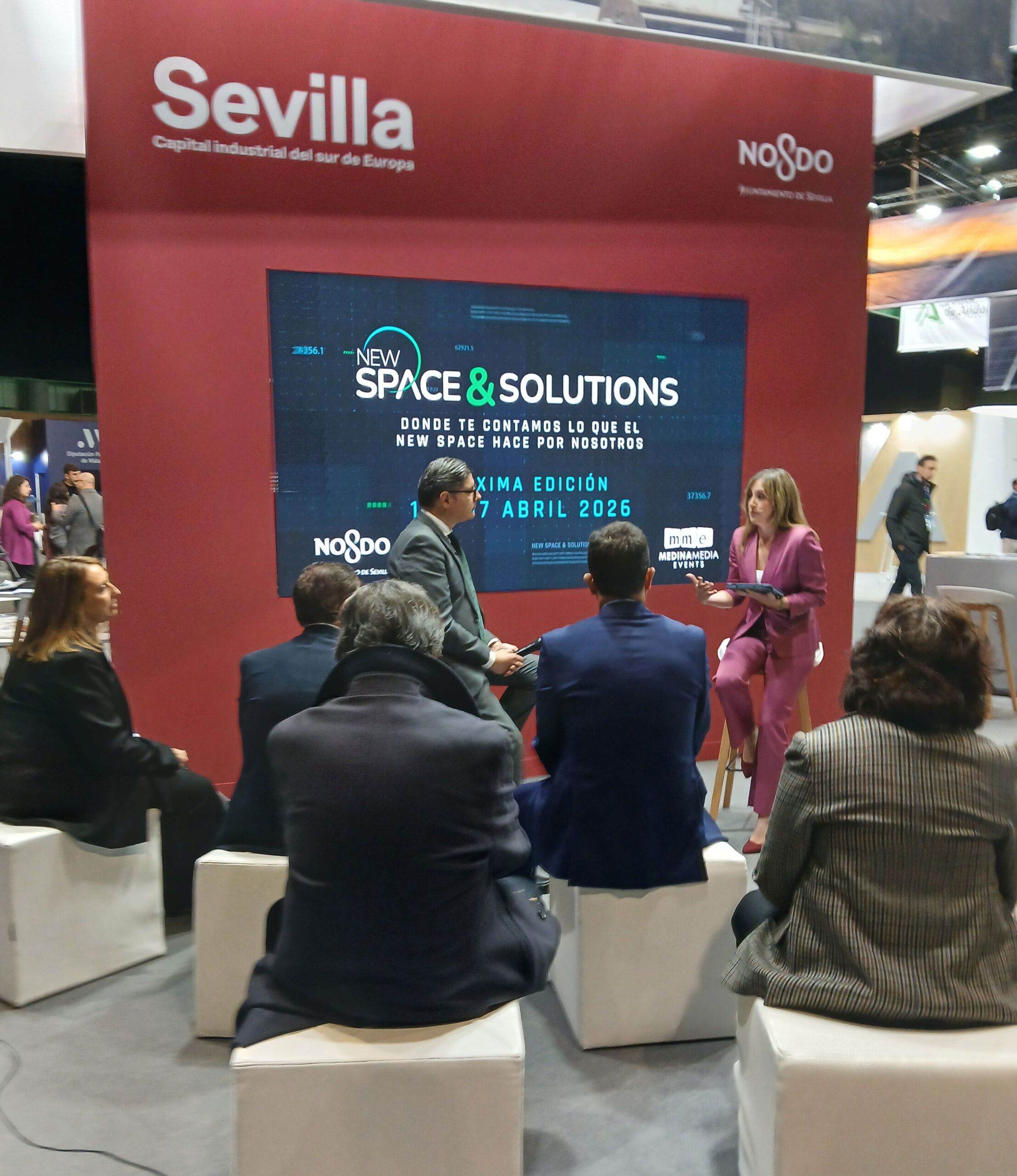
NISE Seville 2025 – ‘New Industry in Southern Europe’ – the leading international trade fair for the new green and digital industry, hosted the presentation of New Space & Solutions 2026 at the Seville City Council stand, as part of the ‘Seville, Industrial Capital of Southern Europe’ programme. This event will once again place the city at the centre of the international space ecosystem. The session, led by María Medina, Managing Director of Medina Media Events and Executive Director of Medina Media Global, opened with an interview with Álvaro Pimentel, Deputy Mayor and Councillor for Economy, who highlighted Seville’s strategic role as a technological hub and driver of the new aerospace economy.
María Medina also underlined the event’s commitment to the visibility of female talent, public-private collaboration and scientific dissemination, reaffirming the independent and open nature of New Space & Solutions. After the institutional intervention, she gave way to a broader conversation with Álvaro Pimentel, focusing on the economic and innovative impact of the space sector in Seville and the city’s priorities for consolidating its position as a European benchmark.
The day continued from 11:00 a.m. with sessions dedicated to the Seville aerospace industry and research capabilities, with the participation of companies and entities such as Airbus (with presentations by Pedro Jesús Ruiz Caballero, José Carlos Díaz Cruz, Josef Hotz Ordoño and Juan Manuel Castañeda Garrido), Alter Technology, Solarmems and Indaero, as well as university teams from the European STRATOLASER Project and specialists in critical systems such as Professor Rafael Vázquez. The afternoon programme included a presentation by the Seville Institute of Biomedicine (IBiS), a session by ESA BIC Andalusia led by Gracia Catalina Piñeiro, and a block on opportunities for technology-based companies, with the participation of Metadev, Astroblob, Imageryst, AstrothrustAI, Orbital Boost Aerospace (OBA Space), Albor Space, Hisperion Aerospace, Kentia and Foodimental.
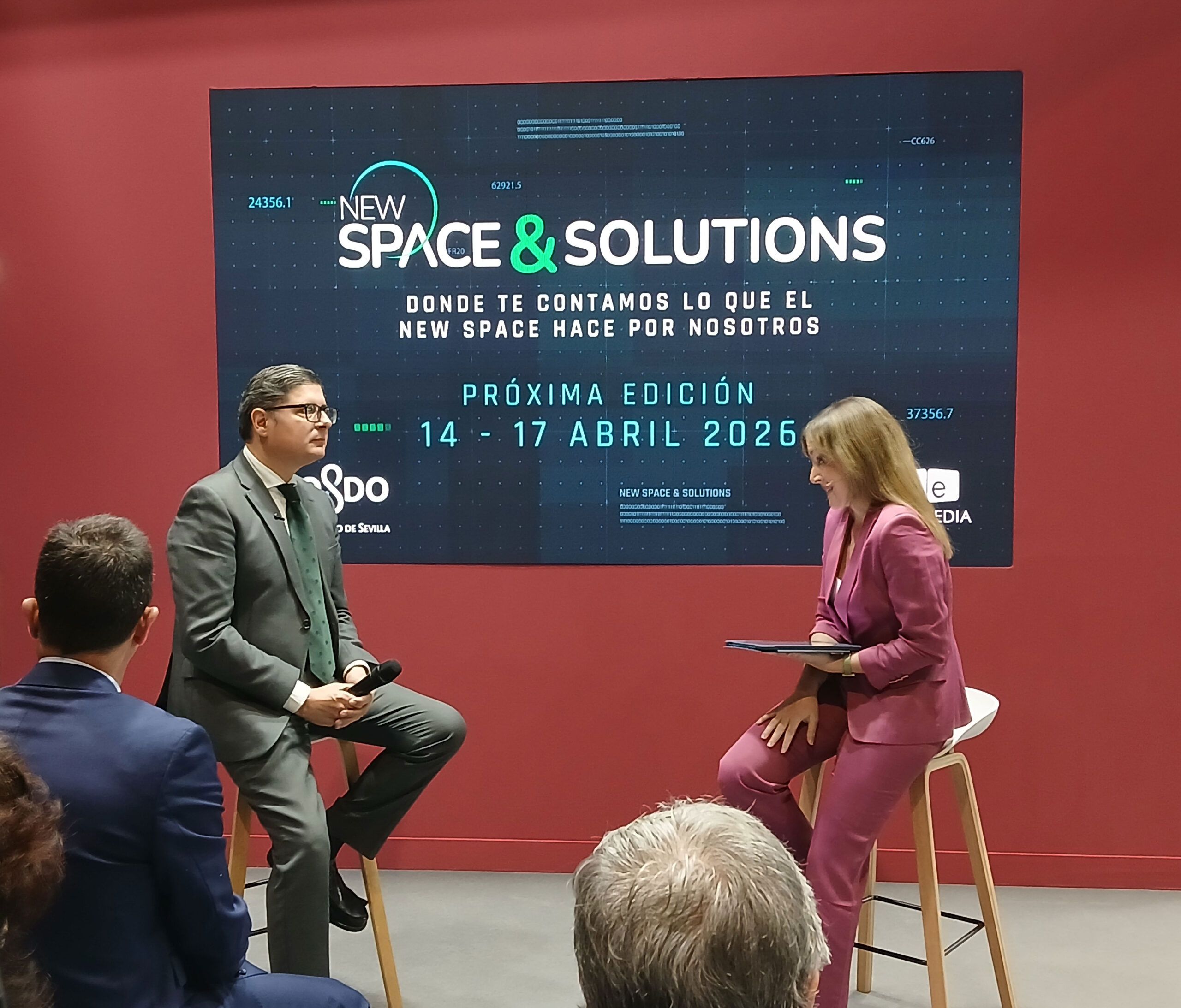
María Medina: Álvaro, one of the City Council’s most important initiatives in the aerospace sector is ‘Seville, Spanish Space Capital’. Seville is already the national space capital. What are the goals of this major project?
Álvaro Pimentel: There is no doubt that Seville is the Spanish space capital; it has been for a few years now, but it was necessary to take it a step further. The idea came up at the Space Forum: we needed to further showcase the strength and potential of the sector in the city. The arrival of the Spanish Space Agency encouraged us greatly. With this strategy, we are showing the whole world — not just Spain — our leadership. The Space Forum is key to this initiative; I want to acknowledge that. This seal helps us attract companies, generate public-private synergies and reinforce the importance of the sector for Seville.
María: What is Seville’s current situation in the aerospace sector?
Álvaro: We are in a very good place. We have large driving forces and many small companies that are growing in terms of turnover and quality employment. It is a sweet moment, but we must continue to innovate and push forward. We recently visited the Alter Technology laboratory, an example of a leading Seville-based multinational. With ‘Seville, Space Capital’, we will achieve greater visibility for these companies. The aerospace sector is fundamental to Seville’s economy: it leads the province’s exports. Seville City Council will continue to support it as part of our economic diversification strategy.
María: The Spanish Space Agency chose Seville as its headquarters. What has this meant for the city?
Álvaro: It has been a turning point. The fact that strategic and investment decisions with national reach are made in Seville creates a magnet for companies and talent. We are already seeing the effects. We work closely with the Agency because it is a key source of support for both the sector and the city.
María: One of the major milestones for 2026 will be ESA BIC Andalusia, the space business incubator. What can you tell us about it?
Álvaro: It is going to be a very important milestone: a space business incubator in Seville. The calls for proposals have already been completed and there are some very interesting projects. The facilities in the Renfe warehouses in San Jerónimo are already ready. It will not only be the 12 incubated companies: many more will come from these projects. It will serve to attract talent, retain university talent and encourage the return of those who left. It will be key to economic development.
María: Internationally, how is Seville positioned in the sector?
Álvaro: Seville is one of Europe’s aerospace capitals, along with Hamburg and Toulouse. Thanks to Airbus and many other internationally-oriented companies, Seville is recognised globally. Manufacturing, research and training take place here: more than 3,000 pilots from all over the world come to the Airbus Training Centre. Companies such as Alter Technology develop projects in Canada, Australia, China… The space technology that is born in Seville reaches the whole world. The space sector is already a Seville brand.
María: New Space & Solutions is also held here. What does this mean for the City Council?
Álvaro: Beyond talking live with an astronaut from the International Space Station, the event allowed us to explain the new uses of space to the public. It breaks down the idea that everything is military or satellite-related: space is much more than that. New Space & Solutions showcased new opportunities and challenges in the sector and helped spread the word about where the future of space is headed. We are very proud and grateful that it is being held in Seville.
María: Speaking of the future, what is the city’s strategic plan? You also mentioned the space district project.
Álvaro: Our strategy is based on supporting innovation, retaining talent, attracting companies and raising the profile of the sector. Through Sevilla Open for Business and Sevilla Acelera, we promote business projects. As for the aerospace district, we believe that the best location is next to the airport. In the Santa Bárbara area, we will develop more than 800,000 m² for services, industry and logistics, as well as 24,000 homes. This will facilitate the establishment of new companies and projects.
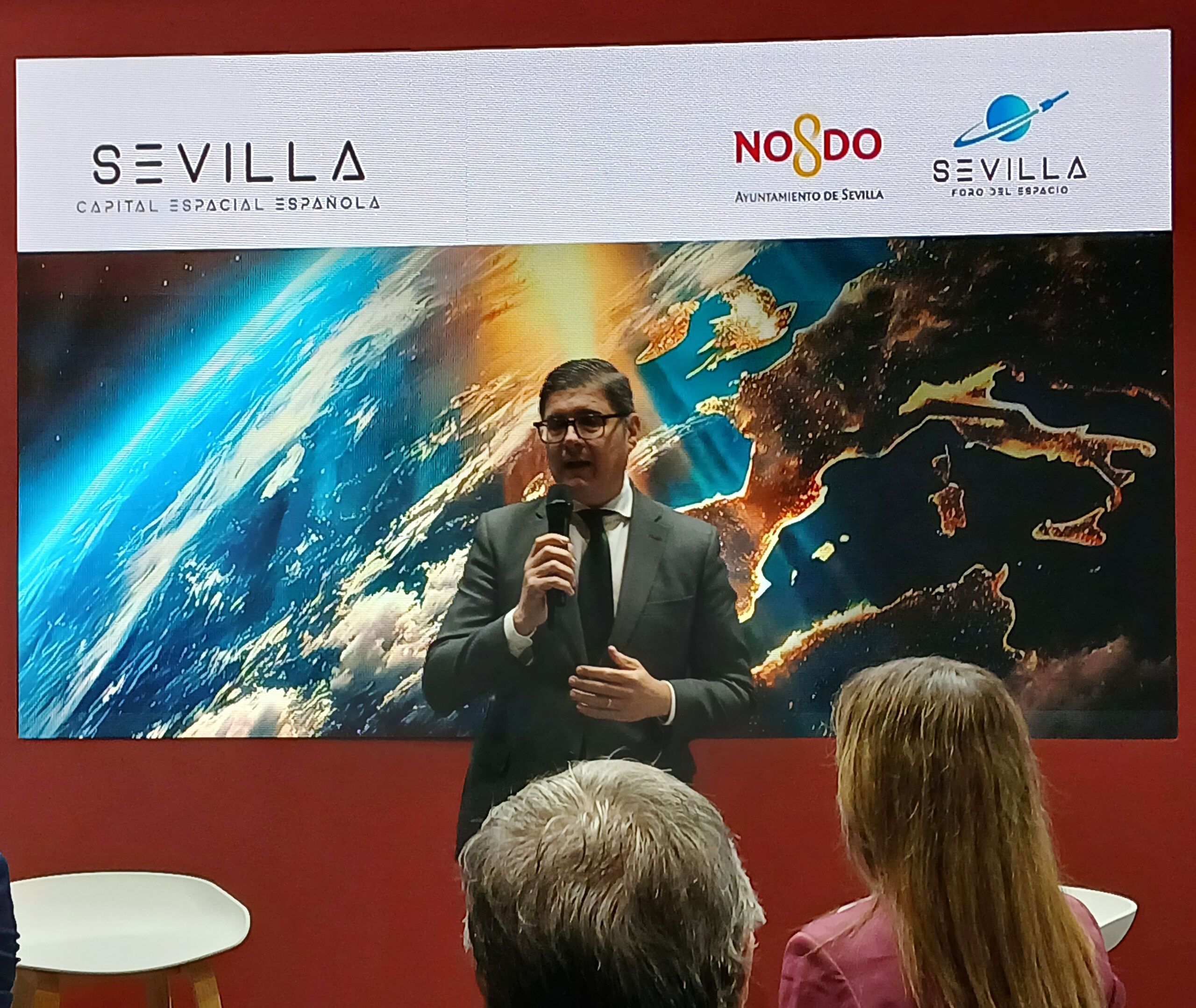
María: Seville is a leader in the space sector. Is it also a leader in the industrial sector?
Álvaro: Yes. Seville is a tourist powerhouse, but it also has a very strong, modern and expanding industrial sector. Our business parks are benchmarks. The industrial sector is already very close to tourism in terms of GDP, and I am convinced that it will soon surpass it. Today’s industry is technology, innovation, the digital age, aerospace… and Seville will continue to promote it.
María: To conclude, any final thoughts on NISE and your participation?
Álvaro: I would like to thank all the companies and organisations that are participating. NISE helps us to proudly show that Seville is an industrial city with cutting-edge sectors. Sevillians are often unaware of the magnitude of these companies, but they do exist. We have Sevilla TechPark, the most important science and technology park in Spain and one of the most important in Europe. The combined turnover of Sevilla TechPark and Málaga TechPark exceeds that of all other parks in the country. NISE helps us to believe it: Seville is a leading city, with an industrial wealth as valuable as its heritage. We must highlight this.